• AI글쓰기 2.1 업데이트
PARTNER
검증된 파트너 제휴사 자료

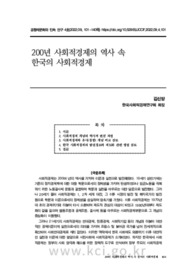
200년 사회적경제의 역사 속 한국의 사회적경제 (The Meaning of Social Economy in Korea -Focusing on its 200-year historical evolution-)

40 페이지
기타파일
최초등록일 2025.05.26 최종저작일 2022.09
40P 미리보기
200년 사회적경제의 역사 속 한국의 사회적경제
  • 미리보기

    서지정보

    · 발행기관 : 국립경국대학교 민속학연구소
    · 수록지 정보 : 공동체문화와 민속 연구 / 4호 / 101 ~ 140페이지
    · 저자명 : 김신양

    초록

    사회적경제는 200여 년의 역사를 거치며 이론과 실천으로 발전해왔다. 19세기 상반기에는 기존의 정치경제학에 대한 대항 학문으로서의 정체성을 가지며 탄생하였으나 임금노동을 극복하기 위한 노동결사체 운동과 결합하며 학문과 실천을 아우르는 대안 담론으로 발전했다. 그러나 20세기 들어 사회적경제는 1, 2차 세계 대전, 그 이후 시장의 발전 및 복지국가의 발전 등으로 학문과 이론으로서의 정체성을 상실하며 암흑기를 거쳤다. 이후 사회적경제는 1970년대 초의 경제위기와 더불어 다시 소환되며 제도적 관심의 대상이 되었고 1980년대부터 제도화의 길을 걸으며 협동조합과 공제조합, 결사체 등을 아우르는 사회적경제부문으로 그 개념의 중심축이 이동했다.
    그러나 21세기의 사회적경제는 연대경제, 민중경제, 사회적기업 등의 개념과 더불어 대안적인 경제이론이자 실천으로서의 의미를 가지며 프랑스 및 불어권 국가를 넘어 전세계적으로 확산되어 사회연대경제로 자리 잡았다. 이러한 맥락에서 한국 사회에도 외환위기 이후 대안적인 실천과 이론에 대한 열망으로 시민사회에 사회적경제가 소개되었다. 하지만 한국에서 사회적경제는 정부의 사회 양극화 해소를 위한 정책적 도구로 인식되며 정부 주도의 사회적경제 발전경로를 보였다. 이는 2006년 말 사회적기업육성법 제정을 필두로 각 부처의 마을기업, 자활기업, 마을관리사회적협동조합이라는 정책과 더불어 기업 만들기와 일자리 창출이라는 양상으로 드러난다.
    이에 한국 사회에서 사회적경제 개념은 그 역사적 맥락이 사장된 채 협소한 의미로 받아들여지며 제도적 인정을 받은 기업이 중심이 되는 문제를 노정하고 있다. 그 결과 사회적경제 제도화 과정의 가장 중요한 단계인 사회적경제기본법 제정에서 제출된 여러 안 또한 이러한 틀을 벗어나지 못하고 있다. 다른 한편, 한국 사회에서 사회적경제는 열광의 대상이지만 비판의 표적이자 갈등의 장이기도 하다. 너무 많은 정부 예산이 들어간 특혜라고 비판하는 이도 있고, 다른 한편에서는 사회적경제가 정부 정책의 도구가 되어 자율성을 잃었다며 자생력을 강화해야 한다는 자성의 목소리를 내기도 한다. 이런 상황은 한국의 사회적경제가 기업 수 늘리기와 같은 양적 성장이 아니라 오히려 그 방향성에 대한 성찰이 필요함을 말해준다. 따라서 이 글은 사회적경제의 새로운 방향성 정립을 위해 전제 되어야 할 기본 요건인 역사와 개념을 검토하며 사회적경제를 보는 안목을 기르는 데 초점을 맞추고, 사회적경제기본법을 중심으로 사회적경제의 제도화를 둘러싼 쟁점을 도출하여 문제의 원인을 찾고 토론 지점을 제안하고자 한다.
    우선 사회적경제에 대한 협소한 인식에서 벗어나 개념의 역사성, 복합성을 고려하여 새로이 개념을 정립할 필요가 있다. 둘째, 이러한 개념 정립을 바탕으로 법제정을 비롯한 사회적경제의 제도화 과정에서 전 세계 보편적으로 수용되는 사회적경제 개념과의 조응 관계를 고려해야 한다. 셋째, 대안적 학문으로서의 사회적경제의 의미를 복원하여 제도에 의존하여 발전하는 한국 사회적경제의 방향성을 점검하고, 현장의 실천의 의미를 해석하고 방향성을 수립하는 데 기여하는 이론적 토대로 삼는다.

    영어초록

    The Social economy is a theoretical and practical notion of about 200 years of history. When it appeared for the first time in France in 1830, it was a critical science as opposed to political economy and then developed as an alternative paradigm to abolish wage labor by organizing workers’ associations during the second half of the 19th century. However, the notion of social economy was eclipsed by the economic crisis of the 1970s, triggered by the oil shock. It was considered an effective tool for combating social problems such as social exclusion. Therefore, its institutionalization has been processed during the last two decades of the 20th century. Since then, the notion of social economy has shifted to social economy sector consisting of cooperatives, mutual societies, and associations.
    Since the end of the 20th century, the social economy has represented an alternative economic theory and practices along with newly emerged notions, such as solidarity economy, popular economy, and social enterprise. It spread beyond France and French-speaking countries while being integrated into a newly created notion of social and solidarity economy in the 21st century. In this context, the social economy was introduced in the Korean civil society, aspiring alternative theories and practices after the financial crisis of 1997, under different terms such as third sector, social employment, or social enterprise. The Korean government enacted the Social Enterprise Promotion Act at the end of 2006, considering social enterprises as an efficient political tool for combating social bipolarization. From then on, different ministries started to implement policy measures promoting the creation of enterprises with social missions, such as community enterprises and self-sufficient enterprises. These categories of government-certified or accredited enterprises, together with cooperatives, according to basic laws on cooperatives of 2012, are commonly considered social economy enterprises. That is why the development pathway of the social economy in Korea is characterized by a government-driven and policy-dependent model.
    Therefore, the notion of social economy in Korea seems to have been perceived in a narrow meaning without being taken into consideration its historical context and widely accepted usage of the term at the international level. Moreover, its meaning is distorted, representing mainly government-certified or accredited categories of enterprises except for cooperative enterprises. Diverse proposals submitted to enact basic laws on the social economy are said to be in the same vein, and so they have to be reviewed critically.
    Meanwhile, the social economy in Korean society is an object of enthusiasm from one side. At the same time, it is the target of criticism and the field of conflict from the other. One criticizes it has too many privileges benefiting from public support schemes, while others think it has become an instrument of public policies and hence lost its self-sustainability. Considering this situation, it is necessary to review the directions and strategies of the social economy instead of continuing the race for further quantitative growth.
    This article aims to develop an insight into the social economy through an analytical examination of the historical evolution of the term— the precondition to redefine new directions for the social economy. On this ground, this article draws several issues derived from the process of its institutionalization and clarifies the contradictory points of the currently used method of identifying the social economy. Such a task could lead us to answer if the definition of social economy in Korean society corresponds to the universally accepted usage of the term, questioning its legitimacy.
    This article ends up with three suggestions for the further development of social economy in Korean society wishing to succeed in its meaningful tradition as a practical response to profit-oriented entrepreneurship and as an alternative theory so that it could serve as a theoretical frame to review development strategies and to interpret and orient field practices.

    참고자료

    · 없음
  • 자주묻는질문의 답변을 확인해 주세요

    해피캠퍼스 FAQ 더보기

    꼭 알아주세요

    • 자료의 정보 및 내용의 진실성에 대하여 해피캠퍼스는 보증하지 않으며, 해당 정보 및 게시물 저작권과 기타 법적 책임은 자료 등록자에게 있습니다.
      자료 및 게시물 내용의 불법적 이용, 무단 전재∙배포는 금지되어 있습니다.
      저작권침해, 명예훼손 등 분쟁 요소 발견 시 고객센터의 저작권침해 신고센터를 이용해 주시기 바랍니다.
    • 해피캠퍼스는 구매자와 판매자 모두가 만족하는 서비스가 되도록 노력하고 있으며, 아래의 4가지 자료환불 조건을 꼭 확인해주시기 바랍니다.
      파일오류 중복자료 저작권 없음 설명과 실제 내용 불일치
      파일의 다운로드가 제대로 되지 않거나 파일형식에 맞는 프로그램으로 정상 작동하지 않는 경우 다른 자료와 70% 이상 내용이 일치하는 경우 (중복임을 확인할 수 있는 근거 필요함) 인터넷의 다른 사이트, 연구기관, 학교, 서적 등의 자료를 도용한 경우 자료의 설명과 실제 자료의 내용이 일치하지 않는 경우

찾으시던 자료가 아닌가요?

지금 보는 자료와 연관되어 있어요!
왼쪽 화살표
오른쪽 화살표
문서 초안을 생성해주는 EasyAI
안녕하세요 해피캠퍼스의 20년의 운영 노하우를 이용하여 당신만의 초안을 만들어주는 EasyAI 입니다.
저는 아래와 같이 작업을 도와드립니다.
- 주제만 입력하면 AI가 방대한 정보를 재가공하여, 최적의 목차와 내용을 자동으로 만들어 드립니다.
- 장문의 콘텐츠를 쉽고 빠르게 작성해 드립니다.
- 스토어에서 무료 이용권를 계정별로 1회 발급 받을 수 있습니다. 지금 바로 체험해 보세요!
이런 주제들을 입력해 보세요.
- 유아에게 적합한 문학작품의 기준과 특성
- 한국인의 가치관 중에서 정신적 가치관을 이루는 것들을 문화적 문법으로 정리하고, 현대한국사회에서 일어나는 사건과 사고를 비교하여 자신의 의견으로 기술하세요
- 작별인사 독후감
해캠 AI 챗봇과 대화하기
챗봇으로 간편하게 상담해보세요.
2026년 01월 14일 수요일
AI 챗봇
안녕하세요. 해피캠퍼스 AI 챗봇입니다. 무엇이 궁금하신가요?
8:45 오후