• AI글쓰기 2.1 업데이트
BRONZE
BRONZE 등급의 판매자 자료

유전학실험 DNA extraction

"유전학실험 DNA extraction"에 대한 내용입니다.
3 페이지
워드
최초등록일 2024.07.19 최종저작일 2024.06
3P 미리보기
유전학실험 DNA extraction
  • 이 자료를 선택해야 하는 이유

    이 내용은 AI를 통해 자동 생성된 정보로, 참고용으로만 활용해 주세요.
    • 전문성
    • 명확성
    • 실용성
    • 유사도 지수
      참고용 안전
    • 🔬 실제 유전학 실험 프로토콜의 상세한 과정 제공
    • 🧬 DNA 추출의 과학적 원리와 메커니즘 설명
    • 📊 실험 결과 및 데이터 분석 포함

    미리보기

    목차

    1. Subject
    2. Object
    3. Introduction
    4. Materials & Method
    5. Result
    6. Discussion
    7. Reference

    본문내용

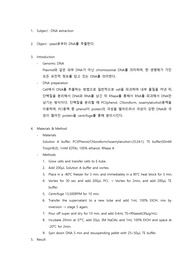
    1. Subject : DNA extraction

    2. Object : yeast로부터 DNA를 추출한다.

    3. Introduction
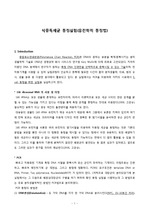
    - Genomic DNA
    Plasmid와 같은 외부 DNA가 아닌 chromosomal DNA를 의미하며, 한 생명체가 가진 모든 유전적 정보를 담고 있는 DNA를 의미한다.
    - DNA preparation
    Cell에서 DNA를 추출하는 방법으로 일반적으로 cell을 파괴하며 내부 물질을 꺼낸 뒤, 단백질을 분리해서 DNA와 RNA를 남긴 뒤 RNase를 통해서 RNA를 파괴해서 DNA만 남기는 방식이다. 단백질을 분리할 때 PCI(phenol, Chloroform, isoamylalcohol)용액을 이용하며, PCI용액 중 phenol이 protein의 극성을 떨어뜨려서 극성이 강한 DNA와 극성이 떨어진 protein을 centrifuge를 통해 분리시킨다.

    참고자료

    · https://en.wikipedia.org/wiki/Sodium_acetate
    · Oda Y, Sadakane K, Yoshikawa Y, Imanaka T, Takiguchi K, Hayashi M, Kenmotsu T, Yoshikawa K. Highly Concentrated Ethanol Solutions: Good Solvents for DNA as Revealed by Single-Molecule Observation. Chemphyschem. 2016 Feb 16;17(4):471-3. doi: 10.1002/cphc.201500988. Epub 2016 Jan 13. PMID: 26891092; PMCID: PMC4770436.
  • AI와 토픽 톺아보기

    • 1. Genomic DNA
      Genomic DNA is the complete set of genetic material present in an organism's cells. It contains the instructions necessary for the development, function, and reproduction of the organism. Understanding the structure and composition of genomic DNA is crucial for various fields of biology, including genetics, molecular biology, and biotechnology. Genomic DNA is a complex macromolecule composed of nucleotides, which are made up of a sugar (deoxyribose), a phosphate group, and one of four nitrogenous bases (adenine, thymine, guanine, and cytosine). The specific sequence of these bases encodes the genetic information that determines the characteristics and functions of an organism. Studying the genomic DNA of different organisms can provide insights into their evolutionary relationships, genetic diversity, and potential applications in areas such as disease diagnosis, personalized medicine, and genetic engineering.
    • 2. DNA extraction method
      DNA extraction is a fundamental technique in molecular biology and genetics, as it allows for the isolation and purification of genomic DNA from biological samples. There are various methods available for DNA extraction, each with its own advantages and limitations. The choice of extraction method depends on factors such as the type of sample, the desired purity and yield of the DNA, and the downstream applications. Common DNA extraction methods include the use of organic solvents (e.g., phenol-chloroform), silica-based column purification, and magnetic bead-based separation. Each method involves a series of steps, such as cell lysis, protein denaturation, and DNA precipitation or adsorption, to separate the DNA from other cellular components. The extracted DNA can then be used for a wide range of applications, including genetic analysis, gene expression studies, and DNA sequencing. Selecting the appropriate DNA extraction method is crucial to ensure the quality and integrity of the DNA sample, which can significantly impact the reliability and accuracy of subsequent analyses.
    • 3. Role of sodium acetate (NaOAc)
      Sodium acetate (NaOAc) plays an important role in various DNA extraction and purification protocols. It is commonly used as a buffer and precipitation agent in the DNA extraction process. The primary function of sodium acetate in DNA extraction is to facilitate the precipitation of DNA from the solution. During the extraction process, the addition of sodium acetate, along with ethanol or isopropanol, helps to remove contaminants and concentrate the DNA. The negatively charged phosphate groups on the DNA backbone interact with the positively charged sodium ions, causing the DNA to precipitate out of the solution. This allows for the separation of the DNA from other cellular components, such as proteins, RNA, and polysaccharides. The use of sodium acetate is particularly important in the final step of DNA extraction, where it helps to ensure the purity and recovery of the DNA. The optimal concentration and pH of the sodium acetate solution can vary depending on the specific protocol and the type of sample being processed. Proper use of sodium acetate is crucial for obtaining high-quality, contaminant-free DNA samples that can be used for downstream applications, such as PCR, sequencing, and genetic analysis.
    • 4. Experimental results
      Experimental results are the foundation of scientific research and play a crucial role in advancing our understanding of the natural world. These results, obtained through carefully designed and executed experiments, provide empirical evidence that supports or refutes hypotheses and theories. Experimental results can take various forms, such as quantitative data, qualitative observations, and visual representations (e.g., graphs, images, or diagrams). The analysis and interpretation of these results are essential for drawing meaningful conclusions and informing future research directions. Rigorous experimental design, accurate data collection, and appropriate statistical analysis are crucial to ensure the reliability and validity of the results. Experimental results should be reported in a clear, transparent, and reproducible manner, allowing other researchers to critically evaluate the findings and build upon the existing knowledge. The dissemination of experimental results through scientific publications and presentations facilitates the exchange of ideas and the advancement of scientific understanding. Ultimately, the careful examination and interpretation of experimental results are the cornerstones of scientific progress, enabling us to expand our knowledge, develop new technologies, and address complex challenges facing humanity.
  • 자료후기

      Ai 리뷰
      DNA 추출 실험 과정과 결과가 잘 정리되어 있으며, 실험 방법과 원리가 자세히 설명되어 있습니다.
    • 자주묻는질문의 답변을 확인해 주세요

      해피캠퍼스 FAQ 더보기

      꼭 알아주세요

      • 자료의 정보 및 내용의 진실성에 대하여 해피캠퍼스는 보증하지 않으며, 해당 정보 및 게시물 저작권과 기타 법적 책임은 자료 등록자에게 있습니다.
        자료 및 게시물 내용의 불법적 이용, 무단 전재∙배포는 금지되어 있습니다.
        저작권침해, 명예훼손 등 분쟁 요소 발견 시 고객센터의 저작권침해 신고센터를 이용해 주시기 바랍니다.
      • 해피캠퍼스는 구매자와 판매자 모두가 만족하는 서비스가 되도록 노력하고 있으며, 아래의 4가지 자료환불 조건을 꼭 확인해주시기 바랍니다.
        파일오류 중복자료 저작권 없음 설명과 실제 내용 불일치
        파일의 다운로드가 제대로 되지 않거나 파일형식에 맞는 프로그램으로 정상 작동하지 않는 경우 다른 자료와 70% 이상 내용이 일치하는 경우 (중복임을 확인할 수 있는 근거 필요함) 인터넷의 다른 사이트, 연구기관, 학교, 서적 등의 자료를 도용한 경우 자료의 설명과 실제 자료의 내용이 일치하지 않는 경우

    찾으시던 자료가 아닌가요?

    지금 보는 자료와 연관되어 있어요!
    왼쪽 화살표
    오른쪽 화살표
    문서 초안을 생성해주는 EasyAI
    안녕하세요 해피캠퍼스의 20년의 운영 노하우를 이용하여 당신만의 초안을 만들어주는 EasyAI 입니다.
    저는 아래와 같이 작업을 도와드립니다.
    - 주제만 입력하면 AI가 방대한 정보를 재가공하여, 최적의 목차와 내용을 자동으로 만들어 드립니다.
    - 장문의 콘텐츠를 쉽고 빠르게 작성해 드립니다.
    - 스토어에서 무료 이용권를 계정별로 1회 발급 받을 수 있습니다. 지금 바로 체험해 보세요!
    이런 주제들을 입력해 보세요.
    - 유아에게 적합한 문학작품의 기준과 특성
    - 한국인의 가치관 중에서 정신적 가치관을 이루는 것들을 문화적 문법으로 정리하고, 현대한국사회에서 일어나는 사건과 사고를 비교하여 자신의 의견으로 기술하세요
    - 작별인사 독후감
    해캠 AI 챗봇과 대화하기
    챗봇으로 간편하게 상담해보세요.
    2026년 01월 08일 목요일
    AI 챗봇
    안녕하세요. 해피캠퍼스 AI 챗봇입니다. 무엇이 궁금하신가요?
    12:05 오후