• AI글쓰기 2.1 업데이트
PARTNER
검증된 파트너 제휴사 자료

동의보감 탕액편에 기재된 식이본초의 독성유무에 대한 분류 연구 (Study of Toxicity Presence Classification about Herbal Diet in Tang-aec-pyeon of Dong-ui-bo-gam)

24 페이지
기타파일
최초등록일 2025.07.17 최종저작일 2011.01
24P 미리보기
동의보감 탕액편에 기재된 식이본초의 독성유무에 대한 분류 연구
  • 이 자료를 선택해야 하는 이유
    이 내용은 AI를 통해 자동 생성된 정보로, 참고용으로만 활용해 주세요.
    • 전문성
    • 신뢰성
    • 실용성
    • 유사도 지수
      참고용 안전
    • 🌿 전통 한의학 관점에서 식이본초의 독성을 과학적으로 분석
    • 🔬 1,400종의 약재에 대한 체계적인 독성 분류 연구
    • 🍎 식품과 약재의 장기 섭취에 대한 안전성 평가

    미리보기

    서지정보

    · 발행기관 : 대한한의학회
    · 수록지 정보 : 대한한의학회지 / 32권 / 1호 / 12 ~ 35페이지
    · 저자명 : 신호동, 정종운

    초록

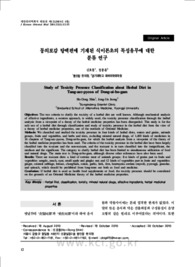
    Objectives: The two criteria to clarify the toxicity of a herbal diet are well known. Although mechanical analysis of effective ingredients, a western approach, is widely used, the toxicity presence classification through the herbal analysis from a viewpoint of a theory of the herbal medicine properties has been disregarded. This study is for the safe use of a herbal diet through classification and study of toxicity presence in the herbal diet from the view of a theory of herbal medicine properties, one of the methods of Oriental Medicine.
    Methods: We classified and studied the toxicity presence in four kinds of herbal diets, waters and grains, animals groups, fruits and vegetables, and herbs and trees, excluding mineral natural drugs, of 1,400 kinds of medicines in 16 chapters of Tang-aec-pyeon, Dong-ui-bo-gam, for which the herbal analysis from a viewpoint of the theory of the herbal medicine properties has been used. The criteria of the toxicity presence in the herbal diet have been largely classified into the toxicant and the non-toxicant, and the toxicant is in turn classified into the insignificant, the medium and the significant. The category to clarify herbal diet has been limited to simultaneous utilization of food and natural drugs. The main text is Dong-ui-bo-gam, although diverse other references have also been used.
    Results: There are toxicant diets: a kind of tortoise meat of animals groups; five kinds of grains part in fruits and vegetables: aengdo, peach, oyat, small apple and gingko nut; and 12 kinds of vegetables part in fruits and vegetables:ginger, oriental cabbage, lettuce, chongbaek, onion, garlic, leek, fern, houttuynia cordata (myeol), pyeongji, geundae,and spinach, which should be prohibited from long-term use both as food and medicine.
    Conclusion: If herbal diet is used as health food supplements or food, the toxicity presence should be considered on the grounds of an Oriental Medicine theory of the herbal medicine properties.

    영어초록

    Objectives: The two criteria to clarify the toxicity of a herbal diet are well known. Although mechanical analysis of effective ingredients, a western approach, is widely used, the toxicity presence classification through the herbal analysis from a viewpoint of a theory of the herbal medicine properties has been disregarded. This study is for the safe use of a herbal diet through classification and study of toxicity presence in the herbal diet from the view of a theory of herbal medicine properties, one of the methods of Oriental Medicine.
    Methods: We classified and studied the toxicity presence in four kinds of herbal diets, waters and grains, animals groups, fruits and vegetables, and herbs and trees, excluding mineral natural drugs, of 1,400 kinds of medicines in 16 chapters of Tang-aec-pyeon, Dong-ui-bo-gam, for which the herbal analysis from a viewpoint of the theory of the herbal medicine properties has been used. The criteria of the toxicity presence in the herbal diet have been largely classified into the toxicant and the non-toxicant, and the toxicant is in turn classified into the insignificant, the medium and the significant. The category to clarify herbal diet has been limited to simultaneous utilization of food and natural drugs. The main text is Dong-ui-bo-gam, although diverse other references have also been used.
    Results: There are toxicant diets: a kind of tortoise meat of animals groups; five kinds of grains part in fruits and vegetables: aengdo, peach, oyat, small apple and gingko nut; and 12 kinds of vegetables part in fruits and vegetables:ginger, oriental cabbage, lettuce, chongbaek, onion, garlic, leek, fern, houttuynia cordata (myeol), pyeongji, geundae,and spinach, which should be prohibited from long-term use both as food and medicine.
    Conclusion: If herbal diet is used as health food supplements or food, the toxicity presence should be considered on the grounds of an Oriental Medicine theory of the herbal medicine properties.

    참고자료

    · 없음
  • 자주묻는질문의 답변을 확인해 주세요

    해피캠퍼스 FAQ 더보기

    꼭 알아주세요

    • 자료의 정보 및 내용의 진실성에 대하여 해피캠퍼스는 보증하지 않으며, 해당 정보 및 게시물 저작권과 기타 법적 책임은 자료 등록자에게 있습니다.
      자료 및 게시물 내용의 불법적 이용, 무단 전재∙배포는 금지되어 있습니다.
      저작권침해, 명예훼손 등 분쟁 요소 발견 시 고객센터의 저작권침해 신고센터를 이용해 주시기 바랍니다.
    • 해피캠퍼스는 구매자와 판매자 모두가 만족하는 서비스가 되도록 노력하고 있으며, 아래의 4가지 자료환불 조건을 꼭 확인해주시기 바랍니다.
      파일오류 중복자료 저작권 없음 설명과 실제 내용 불일치
      파일의 다운로드가 제대로 되지 않거나 파일형식에 맞는 프로그램으로 정상 작동하지 않는 경우 다른 자료와 70% 이상 내용이 일치하는 경우 (중복임을 확인할 수 있는 근거 필요함) 인터넷의 다른 사이트, 연구기관, 학교, 서적 등의 자료를 도용한 경우 자료의 설명과 실제 자료의 내용이 일치하지 않는 경우

“대한한의학회지”의 다른 논문도 확인해 보세요!

문서 초안을 생성해주는 EasyAI
안녕하세요 해피캠퍼스의 20년의 운영 노하우를 이용하여 당신만의 초안을 만들어주는 EasyAI 입니다.
저는 아래와 같이 작업을 도와드립니다.
- 주제만 입력하면 AI가 방대한 정보를 재가공하여, 최적의 목차와 내용을 자동으로 만들어 드립니다.
- 장문의 콘텐츠를 쉽고 빠르게 작성해 드립니다.
- 스토어에서 무료 이용권를 계정별로 1회 발급 받을 수 있습니다. 지금 바로 체험해 보세요!
이런 주제들을 입력해 보세요.
- 유아에게 적합한 문학작품의 기준과 특성
- 한국인의 가치관 중에서 정신적 가치관을 이루는 것들을 문화적 문법으로 정리하고, 현대한국사회에서 일어나는 사건과 사고를 비교하여 자신의 의견으로 기술하세요
- 작별인사 독후감
해캠 AI 챗봇과 대화하기
챗봇으로 간편하게 상담해보세요.
2026년 02월 19일 목요일
AI 챗봇
안녕하세요. 해피캠퍼스 AI 챗봇입니다. 무엇이 궁금하신가요?
9:25 오후