• AI글쓰기 2.1 업데이트
SILVER
SILVER 등급의 판매자 자료

호흡기계 진단검사

"호흡기계 진단검사"에 대한 내용입니다.
8 페이지
한컴오피스
최초등록일 2023.08.11 최종저작일 2023.01
8P 미리보기
호흡기계 진단검사
  • 미리보기

    목차

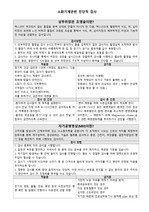
    1. 검사종류
    2. 정상치
    3. 소견과 의미(상승/감소)
    4. 주의사항(검사전후간호)

    본문내용

    X-ray
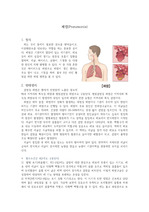
    흉부 X-선 검사는 폐결핵 등 폐의 이상을 발견해내는 방법으로 집단 검진시에 사용되거나 병원에 입원하는 사람에게는 정규적으로 시행되는 검사이다. 또한 그 밖의 심장질환이나 종격동의 이상, 종양 등의 이상을 발견해낼 수 있다.
    - 검사 전 간호
    X-선 검사를 하기 전에 대상자에게 절차를 설명하고, 옷이나 금속제품은 허리 아래로 내리게 하여 금속의 음영이 찍히지 않도록 한다. 그리고 자세를 취해준 후 숨을 깊게 들이마시게 한 다음 사진을 찍을 동안 잠시 숨을 참도록 한다.

    PFT 폐기능검사
    폐기능 검사(Pulmonary function test)는 폐기능 장애를 발견하여 분류하고, 손상 정도를 평가하고, 폐질환의 경로를 찾고, 치료의 반응을 평가하고, 흉부수술 대상자의 간호를 계획하는데 필요한 정보를 제공한다. 간호사는 대상자에게 검사의 가치와 검사방법, 검사중 발생되는 여러 가지 사실에 대해 자세히 설명해 주어 대상자의 불안을 줄여줄 수 있다.
    - 검사 전 간호
    대상자는 검사 전에 담배를 피워서는 안되고 검사하기 4~6시간 전부터는 기관지 확장제를 먹어서는 안된다. 일반적으로 폐기능 검사에서는 대상자를 특별히 준비시킬 사항은 없으나 특별히 지시된 사항이 있을 때는 이를 준비 해 준다.
    - 검사 후 간호
    검사에서 얻어진 결과를 대상자의 예측치와 비교하여 해석한다. 대상자가 실제적으로 나타낸 폐환기 기능검사치가 그 대상자의 예측치의 80~85% 이상이 되면 폐기능검사는 정상범위라고 표현한다.

    ABGA 동맥혈액 가스분석
    동맥혈 가스분석(arterial blood gas analysis : ABGA)은 폐의 가스교환 능력을 알아보는 가장 주된 방법이며, 중환자를 평가하고 관리하는 데 가장 기본적으로 이용하는 검사이다. 동맥혈 가스분석은 PaCO2, PaO2를 측정하여 인공호흡기로 호흡하는 대상자와 COPD 등 폐질환을 갖고 있는 대상자의 호흡기능을 평가한다.

    참고자료

    · 없음
  • AI와 토픽 톺아보기

    • 1. X-ray
      X-ray is a fundamental diagnostic tool in healthcare that provides valuable information about the internal structures of the body. It is a non-invasive and relatively inexpensive imaging technique that can be used to detect a wide range of medical conditions, from fractures and lung diseases to heart and abdominal issues. X-rays work by passing high-energy electromagnetic radiation through the body, which is then captured on a film or digital sensor, creating an image that can be analyzed by healthcare professionals. While X-rays have some limitations, such as the potential for radiation exposure and the inability to visualize soft tissues in detail, they remain an essential component of modern medical practice, providing critical information that helps guide diagnosis and treatment decisions.
    • 2. PFT
      Pulmonary Function Tests (PFTs) are a valuable diagnostic tool for evaluating the health and function of the respiratory system. These tests measure various parameters, such as lung volume, airflow, and gas exchange, to provide a comprehensive assessment of a patient's respiratory capabilities. PFTs are particularly useful in the diagnosis and management of conditions like asthma, chronic obstructive pulmonary disease (COPD), and interstitial lung diseases. By quantifying lung function, PFTs can help healthcare providers identify the underlying cause of respiratory symptoms, monitor disease progression, and guide treatment decisions. While PFTs may require some patient cooperation and can be influenced by factors like age and body composition, they remain an essential component of respiratory care, providing objective data that complements clinical observations and helps ensure the delivery of appropriate and effective treatment.
    • 3. ABGA
      Arterial Blood Gas Analysis (ABGA) is a critical diagnostic tool in healthcare, providing valuable information about the balance of oxygen and carbon dioxide in a patient's bloodstream. This test involves drawing a small sample of blood from an artery, typically in the wrist or groin, and analyzing it to measure the levels of various gases, including oxygen, carbon dioxide, and pH. ABGA is particularly important in the management of respiratory and cardiovascular conditions, as it can help identify underlying issues such as hypoxemia, acidosis, or respiratory distress. By providing objective data on a patient's gas exchange and acid-base status, ABGA can guide treatment decisions, such as the need for supplemental oxygen, mechanical ventilation, or adjustments to medication regimens. While ABGA can be slightly more invasive than other diagnostic tests, its ability to provide real-time, precise information about a patient's physiological status makes it an essential tool in critical care and emergency medicine settings.
    • 4. MRI
      Magnetic Resonance Imaging (MRI) is a powerful diagnostic tool that uses strong magnetic fields and radio waves to create detailed images of the body's internal structures. Unlike X-rays, which rely on ionizing radiation, MRI is a non-invasive and non-ionizing imaging technique that can provide exceptional detail and contrast, particularly in soft tissues like the brain, spinal cord, and musculoskeletal system. MRI is particularly useful in the diagnosis and monitoring of a wide range of medical conditions, from neurological disorders and joint injuries to cancer and cardiovascular disease. By generating high-resolution, three-dimensional images, MRI can help healthcare providers identify subtle abnormalities, track disease progression, and guide treatment decisions. While MRI can be more time-consuming and expensive than some other imaging modalities, its ability to provide detailed, non-invasive information about the body's internal structures makes it an invaluable tool in modern healthcare.
    • 5. CT
      Computed Tomography (CT) is a powerful diagnostic imaging technique that uses X-rays and computer processing to create detailed, three-dimensional images of the body's internal structures. CT scans are particularly useful in the evaluation of a wide range of medical conditions, from traumatic injuries and cancer to cardiovascular and neurological disorders. Unlike traditional X-rays, which provide a two-dimensional view, CT scans can generate high-resolution, cross-sectional images that allow healthcare providers to visualize the body's organs, bones, and soft tissues in great detail. This detailed information can help guide diagnosis, treatment planning, and monitoring of disease progression. While CT scans do involve the use of ionizing radiation, which carries a small risk of radiation exposure, the benefits of this imaging modality often outweigh the potential risks, especially in cases where it is necessary for accurate diagnosis and effective treatment. Overall, CT remains an essential tool in modern healthcare, providing critical information that supports timely and appropriate clinical decision-making.
    • 6. Bronchography
      Bronchography is a specialized diagnostic imaging technique that uses contrast dye to visualize the airways and lung structures. This procedure involves the instillation of a contrast agent into the bronchial tree, which then allows healthcare providers to use X-rays or CT scans to obtain detailed images of the airways. Bronchography can be particularly useful in the evaluation of conditions affecting the bronchi, such as bronchiectasis, obstructions, or tumors. By providing a detailed view of the airway anatomy, bronchography can help healthcare providers identify the underlying cause of respiratory symptoms, guide treatment decisions, and monitor the progression of certain lung diseases. While bronchography is generally considered a safe procedure, it does carry some risks, such as the potential for allergic reactions to the contrast agent or the development of respiratory complications. As with any diagnostic test, the benefits of bronchography must be carefully weighed against the potential risks, and it is typically reserved for cases where the information it provides is essential for effective patient care.
    • 7. Bronchoscopy
      Bronchoscopy is a diagnostic and therapeutic procedure that involves the insertion of a flexible, lighted tube (bronchoscope) into the airways to visualize the respiratory system. This technique is widely used in the evaluation and management of a variety of lung and airway conditions, such as lung cancer, chronic obstructive pulmonary disease (COPD), and respiratory infections. During a bronchoscopy, healthcare providers can obtain samples of lung tissue or fluid for further analysis, as well as perform interventions like removing foreign objects, clearing mucus plugs, or administering targeted treatments. Bronchoscopy is generally considered a safe procedure, but it does carry some risks, such as bleeding, infection, or respiratory distress. The benefits of bronchoscopy, however, often outweigh the potential risks, as it provides valuable information that can guide diagnosis, treatment, and ongoing management of respiratory conditions. As with any medical procedure, the decision to perform a bronchoscopy should be made carefully, taking into account the individual patient's needs and the expertise of the healthcare team.
    • 8. Thoracentesis
      Thoracentesis is a medical procedure in which a small amount of fluid is removed from the space between the lung and the chest wall (the pleural space) using a needle. This procedure is typically performed to diagnose or manage conditions that can cause the accumulation of fluid in the pleural space, such as pleural effusions, empyema, or malignant pleural effusions. By analyzing the fluid sample obtained during thoracentesis, healthcare providers can determine the underlying cause of the fluid buildup and guide appropriate treatment. Thoracentesis is generally considered a safe procedure, but it does carry some risks, such as the potential for bleeding, infection, or lung collapse. The benefits of thoracentesis, however, often outweigh the potential risks, as it can provide critical information that supports timely and effective management of respiratory conditions. As with any medical procedure, thoracentesis should be performed by a trained healthcare professional, and the decision to perform the procedure should be made carefully, taking into account the individual patient's needs and the potential risks and benefits.
    • 9. Lung biopsy
      A lung biopsy is a medical procedure in which a small sample of lung tissue is removed for analysis. This procedure is typically performed to diagnose various lung conditions, such as lung cancer, interstitial lung diseases, or infections. Lung biopsies can be performed using different techniques, including needle biopsy, open surgical biopsy, or video-assisted thoracoscopic surgery (VATS). The choice of biopsy method depends on the location and size of the lesion, as well as the patient's overall health and medical history. While lung biopsies are generally considered safe, they do carry some risks, such as bleeding, pneumothorax (collapsed lung), or infection. The benefits of a lung biopsy, however, often outweigh the potential risks, as it can provide critical information that supports accurate diagnosis and guides appropriate treatment. As with any medical procedure, a lung biopsy should be performed by a trained healthcare professional, and the decision to perform the procedure should be made carefully, taking into account the individual patient's needs and the potential risks and benefits.
  • 자료후기

      Ai 리뷰
      호흡기계 검사의 종류, 정상치, 소견, 주의사항 및 검사 전후 간호에 대한 포괄적인 정보를 제공하여 호흡기계 질환 관리에 필요한 지식을 습득할 수 있습니다.
    • 자주묻는질문의 답변을 확인해 주세요

      해피캠퍼스 FAQ 더보기

      꼭 알아주세요

      • 자료의 정보 및 내용의 진실성에 대하여 해피캠퍼스는 보증하지 않으며, 해당 정보 및 게시물 저작권과 기타 법적 책임은 자료 등록자에게 있습니다.
        자료 및 게시물 내용의 불법적 이용, 무단 전재∙배포는 금지되어 있습니다.
        저작권침해, 명예훼손 등 분쟁 요소 발견 시 고객센터의 저작권침해 신고센터를 이용해 주시기 바랍니다.
      • 해피캠퍼스는 구매자와 판매자 모두가 만족하는 서비스가 되도록 노력하고 있으며, 아래의 4가지 자료환불 조건을 꼭 확인해주시기 바랍니다.
        파일오류 중복자료 저작권 없음 설명과 실제 내용 불일치
        파일의 다운로드가 제대로 되지 않거나 파일형식에 맞는 프로그램으로 정상 작동하지 않는 경우 다른 자료와 70% 이상 내용이 일치하는 경우 (중복임을 확인할 수 있는 근거 필요함) 인터넷의 다른 사이트, 연구기관, 학교, 서적 등의 자료를 도용한 경우 자료의 설명과 실제 자료의 내용이 일치하지 않는 경우

    찾으시던 자료가 아닌가요?

    지금 보는 자료와 연관되어 있어요!
    왼쪽 화살표
    오른쪽 화살표
    문서 초안을 생성해주는 EasyAI
    안녕하세요 해피캠퍼스의 20년의 운영 노하우를 이용하여 당신만의 초안을 만들어주는 EasyAI 입니다.
    저는 아래와 같이 작업을 도와드립니다.
    - 주제만 입력하면 AI가 방대한 정보를 재가공하여, 최적의 목차와 내용을 자동으로 만들어 드립니다.
    - 장문의 콘텐츠를 쉽고 빠르게 작성해 드립니다.
    - 스토어에서 무료 이용권를 계정별로 1회 발급 받을 수 있습니다. 지금 바로 체험해 보세요!
    이런 주제들을 입력해 보세요.
    - 유아에게 적합한 문학작품의 기준과 특성
    - 한국인의 가치관 중에서 정신적 가치관을 이루는 것들을 문화적 문법으로 정리하고, 현대한국사회에서 일어나는 사건과 사고를 비교하여 자신의 의견으로 기술하세요
    - 작별인사 독후감
    해캠 AI 챗봇과 대화하기
    챗봇으로 간편하게 상담해보세요.
    2025년 12월 30일 화요일
    AI 챗봇
    안녕하세요. 해피캠퍼스 AI 챗봇입니다. 무엇이 궁금하신가요?
    12:23 오후