• AI글쓰기 2.1 업데이트
PARTNER
검증된 파트너 제휴사 자료

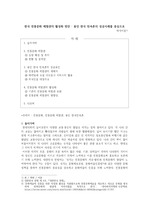
한국시 전통의 계승과 확장 (The succession and extension of Korean poetry)

한국학술지에서 제공하는 국내 최고 수준의 학술 데이터베이스를 통해 다양한 논문과 학술지 정보를 만나보세요.
22 페이지
기타파일
최초등록일 2025.05.30 최종저작일 2008.08
22P 미리보기
한국시 전통의 계승과 확장
  • 미리보기

    서지정보

    · 발행기관 : 한국시학회
    · 수록지 정보 : 한국시학연구 / 22호 / 31 ~ 52페이지
    · 저자명 : 김현자

    초록

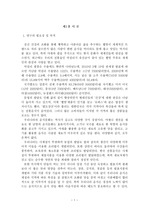
    본고는 문학사의 통시적이고 공시적인 변화 속에서도 지속되어 온 한국시의 전통과 원형적 동일성을 문학적 언술의 근원을 이루는 시간과 공간 의식, 그리고 시점과 거리의식 등을 통하여 고찰하고자 한다.
    경계가 해체된 시공간에 대한 지향은 한국인의 고유한 인식틀로 자리잡고 있다. 엄격한 경계를 자유자재로 넘나드는 공간에서 ‘보고 - 보이는 나와 타자의 상관관계’를 추출해 낼 수 있으며, 타자 속의 나 혹은 내가 타자로 전위되는 복합적 언술을 읽을 수 있다. 경계를 자유롭게 넘나드는 공간의식은 나와 타자 사이의 관계 지향성과 긴밀하게 연결되어 있으며, 보이고 보여지는 관계 속에서 자유롭게 변전하는 목소리를 통해 한국시의 전통으로서 면면히 이어지고 있다. 이러한 공간 의식은 한국 문학의 양식에서는 문답가나 병렬구조(parallelism)를 통해서 구현되고 있으며, 이러한 형식은 독자를 시의 문맥으로 불러들이는 역할을 하면서 다시점(多視點)의 언술로 전이되며, 텍스트를 통해서 화자의 통일된 정서를 구현하는 서정시만의 대화성(Dialigizität)을 형성하면서 정서의 상태를 구현함으로써 보다 확장된 경험을 가능케 한다. 이러한 시적 전통은 김소월, 한용은, 박목월, 윤동주, 유치환 등을 거쳐 청록파 시인 박목월, 박두진, 조지훈, 김광섭, 오규원으로 이어지고 있다.
    시간에 대한 서구의 직선적인 관점과 대조되는 동양의 순환론적 시간 의식은 한국시 전반에 걸쳐 두루 발견된다. 인연과 재생에 의한 순환구조와 영원의 시간은 이육사, 서정주, 신석정, 박용래, 박재삼, 김광림, 황동규, 정현종 등 많은 시인들에게도 드러나며 한국시의 시적 미감을 이루는 보편적 요소가 된다. 이 외에도 근대적이고 직선적인 시간의식에 대한 한국적 변용을 보여 주는 이상과 어머니와 집, 몸으로 기억하는 여성적 연대를 보여주는 김혜순과 고정희를 비롯한 여성시인들의 시는 통합적인 시간의식을 보여주고 있다. 이러한 시간의식은 어머니, 집, 고향과 같은 원형적인 그리움의 대상을 찾아가는 시간여행으로도 나타나는데, 이를 통하여 존재의 본질, 생명의 본질로의 회귀와 죽음에 대한 성찰의식을 살필 수 있다. 한국시는 시간 인식에 있어서 현재 안에 과거나 미래를 병치시키기도 하고 순간을 다양한 시간으로 연결시키기도 하며 또는 서로 무관한 개체를 연결하여 시간의 연속성을 만들어 내기도 하면서 현재의 시간을 확장해 간다. 시인들은 시간의 단절성을 연속으로 이끌면서 재창조, 정신화한다.
    또한 한국시는 이곳과 저곳 사이 또는 상반되는 지향 사이에서의 갈등이라는 보편적인 주제를 다루면서도 이 다양한 관계들을 상생(相生)의 미적 거리에 의해서 이어낸다. 삶과 죽음 사이의 시공간을 노래하는 김소월, 천상과 지상 사이를 ‘그네’로 형상화하는 서정주처럼 심미적 거리 의식은 경계 공간과 분절의 시간을 넘어 나와 타자 사이의 대립성을 완화시켜 나간다. 너와나, 이곳과 저곳, 긍정과 부정을 함께 바라보려 하기에, 그 어느 쪽으로도 치우치지 않는 지점에서 두 세계를 긍정적으로 통합하는 거리 감각이 획득하게 된다. 이것은 궁극적으로는 경계와 장애를 넘어 세계를 통합적으로 인식하려는 무애(無涯)나, 시공간이 지닌 모든 경계를 포용하고 다시 열어놓는 원융(圓融)으로 이어지며, 한국적 사유의 원형을 이루고 있다. 이러한 사유방식은 단절 속에서 화합을, 분리 속에서 통합을 꿈꾸는 에너지로 작용하면서 한국시의 전통을 확장시켜나가고 있다.

    영어초록

    This paper aims at exploring the archetypical identification and the tradition of Korean poetry through its sense of space and time, its sense of poetic distance and the point of views in it.
    The orientation toward dissolution of time frame and spacial boundaries has become a typical Korean way of thinking, or a typical framework of the Koreans. And the breaking-up of spacial thresholds is closely connected with the disruption of the boundaries between self and others in Korean literature and makes the discourse complicated in which self can be others and vice versa. This kind of spacial consciousness has been a poetic tradition in Korean poetry, expressed in call and response songs and by some literary parallelism. And these two poetic structures in turn take the readers to the poetic context, display multiple point of views in poems, form so-called 'Dialigizität' and let the readers have extended experiences. This sort of poetic tradition has been maintained by the poets from Kim, So-Wol, Han, Yong-Woon, Yoon, Dong-Ju, and Yu, Chi-Whan through the poets like Park, Mok-Wol, Park, Doo-Jin, Cho, Ji-Hoon, Kim, Kwang-Sub, and recently to Oh, Kyu-Won.
    The circular view of time which has been typical in Eastern culture contrasting to the linear view of time in Western culture, is also pervasive in Korean poems. Alongside with the circular view originated from the philosophical concepts like karma and regeneration, eternity of time, too, is one of the general characteristics consisting Korean poetic beauty and is embodied in a large number of poems written by Lee, Yuk-Sa, Seo, Jeong-Ju, Shin, Suk-Jeong, Park, Yong-Rae, Park, Jae-Sam, Kim, Kwang-Rim, Hwang, Dong-Kyu and Cheong, Hyun-Jong etc. Besides, various 'integrated' versions of time consciousness can be found in the poems of Lee, Sang where the linear time consciousness of Western culture has been modified in a Korean manner and in the works of some female poets such as Kim, Hye-Soon and Koh, Jeong-Hee who pursue a feminist solidarity through the images of mother, home and body. The sense of time the women poets have sometimes appears in forms of time trips to seek the archetypical attachment objects like mother, home or hometown and during the trips they delve into the essence of existence and life, speculating death. Korean poems extend the present by means of juxtaposing the present, the past and the future, with connecting some moments to others, and linking unrelated things together. Therefore the poets overcome fragmentation of time, leading it into the eternity, recreating and spiritualizing it.
    Korean poems do not simply deal with some universal conflicts among the contrasting orientations and dimensions but harmonize them from a poetic distance of beauty. So, it is this aesthetic distance in which Kim, So-wol sings songs about the time and space existing between life and death and Seo, Jeong-ju symbolizes the threshold space between the heaven and the earth, and it is also through this poetic distance which they lessen the conflicts between self and others, beyond the threshold spaces and the fragments of time. The poets have finally attained the balanced, positive sense of poetic distance between self and others, here and there, bright and dark side of life, in the result of their endeavor to ultimately go beyond the thresholds and limitations, which can be referred to as 'Mu-ae' (that means 'no limitations' or 'free from impedition') and their efforts to absorb all the thresholds or boundaries and dissolve them into a new unity, which may be referred to as 'Wonyung.' These two concepts are regarded as the archetype of Korean ways of thinking. These classes of manners of speculation extend the Korean tradition of poetry, supplying an energy to dream of harmony among discordances and of reconciliation among separations.

    참고자료

    · 없음
  • 자주묻는질문의 답변을 확인해 주세요

    해피캠퍼스 FAQ 더보기

    꼭 알아주세요

    • 자료의 정보 및 내용의 진실성에 대하여 해피캠퍼스는 보증하지 않으며, 해당 정보 및 게시물 저작권과 기타 법적 책임은 자료 등록자에게 있습니다.
      자료 및 게시물 내용의 불법적 이용, 무단 전재∙배포는 금지되어 있습니다.
      저작권침해, 명예훼손 등 분쟁 요소 발견 시 고객센터의 저작권침해 신고센터를 이용해 주시기 바랍니다.
    • 해피캠퍼스는 구매자와 판매자 모두가 만족하는 서비스가 되도록 노력하고 있으며, 아래의 4가지 자료환불 조건을 꼭 확인해주시기 바랍니다.
      파일오류 중복자료 저작권 없음 설명과 실제 내용 불일치
      파일의 다운로드가 제대로 되지 않거나 파일형식에 맞는 프로그램으로 정상 작동하지 않는 경우 다른 자료와 70% 이상 내용이 일치하는 경우 (중복임을 확인할 수 있는 근거 필요함) 인터넷의 다른 사이트, 연구기관, 학교, 서적 등의 자료를 도용한 경우 자료의 설명과 실제 자료의 내용이 일치하지 않는 경우

“한국시학연구”의 다른 논문도 확인해 보세요!

찾으시던 자료가 아닌가요?

지금 보는 자료와 연관되어 있어요!
왼쪽 화살표
오른쪽 화살표
문서 초안을 생성해주는 EasyAI
안녕하세요 해피캠퍼스의 20년의 운영 노하우를 이용하여 당신만의 초안을 만들어주는 EasyAI 입니다.
저는 아래와 같이 작업을 도와드립니다.
- 주제만 입력하면 AI가 방대한 정보를 재가공하여, 최적의 목차와 내용을 자동으로 만들어 드립니다.
- 장문의 콘텐츠를 쉽고 빠르게 작성해 드립니다.
- 스토어에서 무료 이용권를 계정별로 1회 발급 받을 수 있습니다. 지금 바로 체험해 보세요!
이런 주제들을 입력해 보세요.
- 유아에게 적합한 문학작품의 기준과 특성
- 한국인의 가치관 중에서 정신적 가치관을 이루는 것들을 문화적 문법으로 정리하고, 현대한국사회에서 일어나는 사건과 사고를 비교하여 자신의 의견으로 기술하세요
- 작별인사 독후감
해캠 AI 챗봇과 대화하기
챗봇으로 간편하게 상담해보세요.
2026년 01월 21일 수요일
AI 챗봇
안녕하세요. 해피캠퍼스 AI 챗봇입니다. 무엇이 궁금하신가요?
8:16 오전