• AI글쓰기 2.1 업데이트
PARTNER
검증된 파트너 제휴사 자료

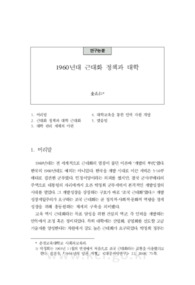
1960년대 근대화 정책과 대학 (The Modernization Policy of the Universities in the 1960s)

한국학술지에서 제공하는 국내 최고 수준의 학술 데이터베이스를 통해 다양한 논문과 학술지 정보를 만나보세요.
32 페이지
기타파일
최초등록일 2025.04.11 최종저작일 2012.12
32P 미리보기
1960년대 근대화 정책과 대학
  • 미리보기

    서지정보

    · 발행기관 : 한국근현대사학회
    · 수록지 정보 : 한국근현대사연구 / 63호 / 243 ~ 274페이지
    · 저자명 : 김정인

    초록

    In the 1960s, the “modernization” process of the universities was led by the government, which maintained tight control upon all the Private universities and pushed forward a strategy designed to boost the development of human resources in areas like science and engineering. The University management system created by the military Park Jeong-hi regime went through numerous controversies (“autonomous functions of the university versus state control”), but after the mid-1960s a “Control & Support” strategy was initiated, and all the universities either national or public or private, were all encouraged (or demanded) to raise scientific and engineering personnel, through post graduate schools and research institutes.
    In the 1960s, the universities continued to lose their respective identities and became rather ‘homogenized’, by the state-initiated modernization strategy and the directions for research and education laid out by such strategy. The University power, mostly composed of the private schools, did not have enough resources or momentum to survive the rapid wake of modernization enabled by economic growth. They all had to fall behind, and the state which had both a ‘carrot’ and a ‘stick’, “controled and supported” the universities at the same time, and led the reformation of the universities, so that they could raise and train human resources in the areas of science and technology, which was what the government was in need of.
    As we can see, the “university modernization” of the 1960s was initiated and proceeded upon the mutual needs of both the state and the university power. The universities today, which tend to follow the state’s education and academism policies in order to secure more funding, instead of trying to earn respect as an academic community, seem to have come from the 1960s, when the state power was relentlessly pursuing modernization in all areas of the country.

    영어초록

    In the 1960s, the “modernization” process of the universities was led by the government, which maintained tight control upon all the Private universities and pushed forward a strategy designed to boost the development of human resources in areas like science and engineering. The University management system created by the military Park Jeong-hi regime went through numerous controversies (“autonomous functions of the university versus state control”), but after the mid-1960s a “Control & Support” strategy was initiated, and all the universities either national or public or private, were all encouraged (or demanded) to raise scientific and engineering personnel, through post graduate schools and research institutes.
    In the 1960s, the universities continued to lose their respective identities and became rather ‘homogenized’, by the state-initiated modernization strategy and the directions for research and education laid out by such strategy. The University power, mostly composed of the private schools, did not have enough resources or momentum to survive the rapid wake of modernization enabled by economic growth. They all had to fall behind, and the state which had both a ‘carrot’ and a ‘stick’, “controled and supported” the universities at the same time, and led the reformation of the universities, so that they could raise and train human resources in the areas of science and technology, which was what the government was in need of.
    As we can see, the “university modernization” of the 1960s was initiated and proceeded upon the mutual needs of both the state and the university power. The universities today, which tend to follow the state’s education and academism policies in order to secure more funding, instead of trying to earn respect as an academic community, seem to have come from the 1960s, when the state power was relentlessly pursuing modernization in all areas of the country.

    참고자료

    · 없음
  • 자주묻는질문의 답변을 확인해 주세요

    해피캠퍼스 FAQ 더보기

    꼭 알아주세요

    • 자료의 정보 및 내용의 진실성에 대하여 해피캠퍼스는 보증하지 않으며, 해당 정보 및 게시물 저작권과 기타 법적 책임은 자료 등록자에게 있습니다.
      자료 및 게시물 내용의 불법적 이용, 무단 전재∙배포는 금지되어 있습니다.
      저작권침해, 명예훼손 등 분쟁 요소 발견 시 고객센터의 저작권침해 신고센터를 이용해 주시기 바랍니다.
    • 해피캠퍼스는 구매자와 판매자 모두가 만족하는 서비스가 되도록 노력하고 있으며, 아래의 4가지 자료환불 조건을 꼭 확인해주시기 바랍니다.
      파일오류 중복자료 저작권 없음 설명과 실제 내용 불일치
      파일의 다운로드가 제대로 되지 않거나 파일형식에 맞는 프로그램으로 정상 작동하지 않는 경우 다른 자료와 70% 이상 내용이 일치하는 경우 (중복임을 확인할 수 있는 근거 필요함) 인터넷의 다른 사이트, 연구기관, 학교, 서적 등의 자료를 도용한 경우 자료의 설명과 실제 자료의 내용이 일치하지 않는 경우

찾으시던 자료가 아닌가요?

지금 보는 자료와 연관되어 있어요!
왼쪽 화살표
오른쪽 화살표
문서 초안을 생성해주는 EasyAI
안녕하세요 해피캠퍼스의 20년의 운영 노하우를 이용하여 당신만의 초안을 만들어주는 EasyAI 입니다.
저는 아래와 같이 작업을 도와드립니다.
- 주제만 입력하면 AI가 방대한 정보를 재가공하여, 최적의 목차와 내용을 자동으로 만들어 드립니다.
- 장문의 콘텐츠를 쉽고 빠르게 작성해 드립니다.
- 스토어에서 무료 이용권를 계정별로 1회 발급 받을 수 있습니다. 지금 바로 체험해 보세요!
이런 주제들을 입력해 보세요.
- 유아에게 적합한 문학작품의 기준과 특성
- 한국인의 가치관 중에서 정신적 가치관을 이루는 것들을 문화적 문법으로 정리하고, 현대한국사회에서 일어나는 사건과 사고를 비교하여 자신의 의견으로 기술하세요
- 작별인사 독후감
해캠 AI 챗봇과 대화하기
챗봇으로 간편하게 상담해보세요.
2026년 01월 18일 일요일
AI 챗봇
안녕하세요. 해피캠퍼스 AI 챗봇입니다. 무엇이 궁금하신가요?
3:47 오전