• AI글쓰기 2.1 업데이트
PLATINUM
PLATINUM 등급의 판매자 자료

[예비보고서]중앙대학교 전자회로설계실습 Op Amp의 특성측정 방법 및 Integrator 설계

"[예비보고서]중앙대학교 전자회로설계실습 Op Amp의 특성측정 방법 및 Integrator 설계"에 대한 내용입니다.
10 페이지
어도비 PDF
최초등록일 2023.06.23 최종저작일 2022.03
10P 미리보기
[예비보고서]중앙대학교 전자회로설계실습 Op Amp의 특성측정 방법 및 Integrator 설계
  • 미리보기

    소개

    "[예비보고서]중앙대학교 전자회로설계실습 Op Amp의 특성측정 방법 및 Integrator 설계"에 대한 내용입니다.

    목차

    1. 설계실습 계획서
    3.1 Offset Voltage, Slew Rate
    3.2 Integrator

    본문내용

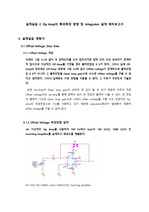
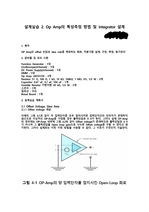
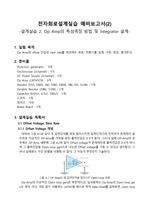
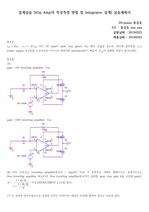
    아래의 그림 1과 같이 두 입력단자를 모두 접지시키면 입력단자간의 전위차가 존재하지 않으므로 이상적인 OP-Amp를 가정할 경우 출력전압은 0 V가 된다. 그러나 실제 OP-Amp의 경우에는 OP-Amp 내부에 그림 1과 같이 Offset voltage가 존재하므로 출력전압은 0 V가 아니며 그 출력전압을 Open loop gain으로 나누면 Offset voltage를 구할 수 있다고 생각된다. 그러나 실제로는 이런 방법을 사용할 수 없다. 그 이유가 무엇인지 기술한다.
    1번 단자와 2번 단자에 같은 입력전압을 넣으면 Differential 성분은 0이라고 추측하기 쉽다. 그러나 실제로는 그림 1과 같이 Op-Amp안의 설계를 보면 Offset-free op amp의 +단자에 가 연결되어있음을 확인 할 수 있다. 정확히 Matching이 되어 있지 않기 때문에 0에는 가깝지만 Differential 성분이 0이 아님을 추측해 볼 수 있다. 물론 작은 값이기 때문에 출력 전압이 무한대는 아니더라도 실제로도 매우 크게 나오게 된다. 그러나 실험 1에서 측정했던 것처럼 15V를 인가한 경우 15V를 벗어난 경우 제대로 된 측정이 어렵기 때문에 이를 이용해 Offset Voltage를 구하기에는 어려움이 있다.

    <중 략>

    (D) Data sheet를 보면 Offset voltage에 대해 min., typ, max. 값이 있는데 그 의미는 무엇인가? Offset voltage는 max. 값만 주어지고 min. 값을 없다. 왜 그렇다고 생각하는가? 그렇다면 offset voltage는 얼마 정도인가?
    min. : 최솟값
    typ. : 대푯값
    max. : 최댓값
    을 의미하며 Offset voltage의 경우 0에 가까울수록 이상적인 회로이기 때문에 min의 경우는 따로 지정할 필요성이 없기 때문이라고 생각한다

    참고자료

    · 없음
  • AI와 토픽 톺아보기

    • 1. Offset Voltage
      Offset voltage is an important parameter in analog circuit design, as it can significantly impact the performance and accuracy of the circuit. Offset voltage refers to the voltage that appears at the output of an operational amplifier (op-amp) or other analog device even when the input voltage is zero. This offset voltage can be caused by various factors, such as manufacturing imperfections, temperature variations, and input bias currents. Understanding and minimizing offset voltage is crucial in applications where high precision and accuracy are required, such as in instrumentation, medical devices, and industrial control systems. Proper design techniques, including input offset voltage cancellation, can help reduce the impact of offset voltage and improve the overall performance of the analog circuit.
    • 2. Offset Voltage 측정방법
      Measuring offset voltage in analog circuits is an important step in ensuring the proper operation and performance of the circuit. There are several methods for measuring offset voltage, each with its own advantages and disadvantages. The most common methods include: 1. Direct measurement: This involves connecting the op-amp or analog device directly to a voltmeter and measuring the output voltage with zero input. This method is simple but may not account for the effects of loading on the circuit. 2. Null method: In this method, an adjustable voltage source is connected in series with the input of the op-amp or analog device, and the voltage is adjusted until the output is zero. The value of the adjustable voltage source is then the offset voltage. 3. Chopper stabilization: This technique involves periodically reversing the input polarity of the op-amp or analog device, which effectively cancels out the offset voltage. The residual voltage at the output is then the offset voltage. 4. Autozeroing: This method uses a sample-and-hold circuit to periodically measure and store the offset voltage, which is then subtracted from the output to cancel the offset. The choice of measurement method will depend on the specific requirements of the application, the available equipment, and the desired accuracy and precision of the offset voltage measurement.
    • 3. Offset Voltage 조정방법
      Adjusting or compensating for offset voltage in analog circuits is an important step in ensuring the proper operation and performance of the circuit. There are several methods for adjusting offset voltage, each with its own advantages and disadvantages: 1. Offset voltage adjustment potentiometer: This involves connecting a potentiometer in series with the input of the op-amp or analog device, allowing the user to manually adjust the offset voltage. 2. Offset voltage nulling: This method involves connecting an adjustable voltage source in series with the input of the op-amp or analog device, and adjusting the voltage until the output is zero. 3. Offset voltage cancellation: This technique involves adding an additional op-amp or analog device in series with the main circuit, with the purpose of cancelling out the offset voltage. 4. Autozeroing: This method uses a sample-and-hold circuit to periodically measure and store the offset voltage, which is then subtracted from the output to cancel the offset. 5. Chopper stabilization: This technique involves periodically reversing the input polarity of the op-amp or analog device, which effectively cancels out the offset voltage. The choice of adjustment method will depend on the specific requirements of the application, the available components, and the desired level of precision and stability. In many cases, a combination of these techniques may be used to achieve the desired level of offset voltage compensation.
    • 4. Slew Rate 측정방법
      Slew rate is an important parameter in analog circuit design, as it determines the maximum rate of change of the output voltage of an op-amp or other analog device. Measuring slew rate is crucial in applications where high-speed performance is required, such as in video amplifiers, high-frequency filters, and power electronics. There are several methods for measuring slew rate, each with its own advantages and disadvantages: 1. Step response method: This involves applying a step input to the op-amp or analog device and measuring the time it takes for the output to reach a certain percentage of its final value. The slew rate is then calculated as the change in output voltage divided by the time. 2. Ramp response method: In this method, a linear ramp input is applied to the op-amp or analog device, and the maximum rate of change of the output voltage is measured. 3. Frequency response method: This involves measuring the frequency response of the op-amp or analog device and calculating the slew rate from the high-frequency rolloff. 4. Transient response method: This method involves applying a high-frequency square wave input to the op-amp or analog device and measuring the rise and fall times of the output. The choice of measurement method will depend on the specific requirements of the application, the available equipment, and the desired accuracy and precision of the slew rate measurement. In many cases, a combination of these techniques may be used to obtain a more comprehensive understanding of the slew rate performance of the analog circuit.
    • 5. Integrator 설계
      Designing an integrator circuit is an important task in analog circuit design, as integrators are widely used in various applications, such as signal processing, control systems, and instrumentation. The design of an integrator circuit involves several key considerations: 1. Operational amplifier selection: The choice of op-amp is crucial, as it determines the performance characteristics of the integrator, such as input offset voltage, input bias current, and gain-bandwidth product. 2. Capacitor selection: The value of the integrating capacitor determines the gain and time constant of the integrator, which in turn affects the frequency response and stability of the circuit. 3. Feedback resistor selection: The feedback resistor, along with the integrating capacitor, determines the time constant of the integrator, which affects the low-frequency response and the overall stability of the circuit. 4. Input impedance and loading: The input impedance of the integrator and the loading on the output must be considered to ensure proper operation and to avoid loading effects. 5. Offset voltage compensation: Offset voltage in the op-amp can cause the integrator output to drift over time, so offset voltage compensation techniques may be necessary. 6. Stability and frequency response: The design of the integrator must consider the stability and frequency response of the circuit, as these factors can impact the overall performance of the system. By carefully considering these design factors, engineers can create high-performance integrator circuits that are well-suited for a wide range of analog applications.
    • 6. Miller integrator circuit을 이용한 offset voltage 측정
      The Miller integrator circuit is a useful technique for measuring offset voltage in analog circuits. This method involves using an op-amp configured as an integrator, with a capacitor connected between the output and the inverting input. The key advantage of the Miller integrator for offset voltage measurement is that it can effectively amplify the offset voltage, making it easier to measure and characterize. The offset voltage at the op-amp input is integrated over time, causing the output voltage to ramp up or down at a rate proportional to the offset voltage. To use the Miller integrator for offset voltage measurement, the following steps are typically followed: 1. Configure the op-amp as an integrator, with a feedback capacitor connected between the output and the inverting input. 2. Apply a known input voltage (typically 0V) to the integrator. 3. Measure the output voltage of the integrator over time, and calculate the rate of change (slope) of the output voltage. 4. The offset voltage can then be calculated from the slope of the output voltage, using the known values of the integrating capacitor and feedback resistor. By using the Miller integrator circuit, the offset voltage can be effectively amplified and measured with high precision, even in the presence of other circuit noise and disturbances. This makes the Miller integrator a valuable tool for characterizing and troubleshooting offset voltage issues in analog circuits.
    • 7. 센서의 출력을 적분하기위한 Integrator 설계
      Designing an integrator circuit to integrate the output of a sensor is an important task in many applications, such as position sensing, velocity measurement, and signal processing. The key considerations in designing such an integrator circuit include: 1. Sensor characteristics: Understanding the output characteristics of the sensor, such as the voltage range, impedance, and noise level, is crucial in selecting the appropriate op-amp and other components for the integrator. 2. Op-amp selection: The choice of op-amp is critical, as it determines the input offset voltage, input bias current, gain-bandwidth product, and other performance parameters that can affect the accuracy and stability of the integrator. 3. Integrating capacitor selection: The value of the integrating capacitor determines the gain and time constant of the integrator, which in turn affects the frequency response and stability of the circuit. 4. Feedback resistor selection: The feedback resistor, along with the integrating capacitor, determines the time constant of the integrator, which affects the low-frequency response and the overall stability of the circuit. 5. Input impedance and loading: The input impedance of the integrator and the loading on the output must be considered to ensure proper operation and to avoid loading effects. 6. Offset voltage compensation: Offset voltage in the op-amp can cause the integrator output to drift over time, so offset voltage compensation techniques may be necessary. 7. Stability and frequency response: The design of the integrator must consider the stability and frequency response of the circuit, as these factors can impact the overall performance of the system. By carefully considering these design factors, engineers can create high-performance integrator circuits that can effectively integrate the output of a sensor, providing accurate and reliable measurements for a wide range of applications.
  • 자료후기

      Ai 리뷰
      이 문서는 Op-Amp의 핵심 특성인 오프셋 전압과 슬루율을 심도 있게 다루고 있으며, 적분기 회로 설계와 시뮬레이션을 통해 실제 구현에 필요한 내용을 상세히 기술하고 있습니다.
    • 자주묻는질문의 답변을 확인해 주세요

      해피캠퍼스 FAQ 더보기

      꼭 알아주세요

      • 자료의 정보 및 내용의 진실성에 대하여 해피캠퍼스는 보증하지 않으며, 해당 정보 및 게시물 저작권과 기타 법적 책임은 자료 등록자에게 있습니다.
        자료 및 게시물 내용의 불법적 이용, 무단 전재∙배포는 금지되어 있습니다.
        저작권침해, 명예훼손 등 분쟁 요소 발견 시 고객센터의 저작권침해 신고센터를 이용해 주시기 바랍니다.
      • 해피캠퍼스는 구매자와 판매자 모두가 만족하는 서비스가 되도록 노력하고 있으며, 아래의 4가지 자료환불 조건을 꼭 확인해주시기 바랍니다.
        파일오류 중복자료 저작권 없음 설명과 실제 내용 불일치
        파일의 다운로드가 제대로 되지 않거나 파일형식에 맞는 프로그램으로 정상 작동하지 않는 경우 다른 자료와 70% 이상 내용이 일치하는 경우 (중복임을 확인할 수 있는 근거 필요함) 인터넷의 다른 사이트, 연구기관, 학교, 서적 등의 자료를 도용한 경우 자료의 설명과 실제 자료의 내용이 일치하지 않는 경우

    함께 구매한 자료도 확인해 보세요!

    찾으시던 자료가 아닌가요?

    지금 보는 자료와 연관되어 있어요!
    왼쪽 화살표
    오른쪽 화살표
    문서 초안을 생성해주는 EasyAI
    안녕하세요 해피캠퍼스의 20년의 운영 노하우를 이용하여 당신만의 초안을 만들어주는 EasyAI 입니다.
    저는 아래와 같이 작업을 도와드립니다.
    - 주제만 입력하면 AI가 방대한 정보를 재가공하여, 최적의 목차와 내용을 자동으로 만들어 드립니다.
    - 장문의 콘텐츠를 쉽고 빠르게 작성해 드립니다.
    - 스토어에서 무료 이용권를 계정별로 1회 발급 받을 수 있습니다. 지금 바로 체험해 보세요!
    이런 주제들을 입력해 보세요.
    - 유아에게 적합한 문학작품의 기준과 특성
    - 한국인의 가치관 중에서 정신적 가치관을 이루는 것들을 문화적 문법으로 정리하고, 현대한국사회에서 일어나는 사건과 사고를 비교하여 자신의 의견으로 기술하세요
    - 작별인사 독후감
    해캠 AI 챗봇과 대화하기
    챗봇으로 간편하게 상담해보세요.
    2025년 12월 28일 일요일
    AI 챗봇
    안녕하세요. 해피캠퍼스 AI 챗봇입니다. 무엇이 궁금하신가요?
    10:40 오전