• AI글쓰기 2.1 업데이트
BRONZE
BRONZE 등급의 판매자 자료

칼럼 크로마토그래피 결과레포트

"칼럼 크로마토그래피 결과레포트"에 대한 내용입니다.
3 페이지
워드
최초등록일 2023.06.19 최종저작일 2023.05
3P 미리보기
칼럼 크로마토그래피 결과레포트
  • 미리보기

    소개

    "칼럼 크로마토그래피 결과레포트"에 대한 내용입니다.

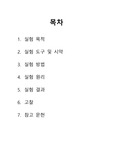
    목차

    1. 개요

    2. 실험방법

    3. 시약 MSDS
    1) methyl bensoate
    2) acetanilide
    3) hexane
    4) ethyl acetate

    본문내용

    개요: 칼럼 크로마토그래피(column chromatography) 의 사용방법을 익히고 이를 통해 유기 혼합물의 분리 방법을 이해한다. 칼럼 크로마토그래피란 고체, 액체 흡착 크로마토그래피의 한 종류로, 혼합물 시료를 칼럼을 사용하여 분리, 분석하는 방법이다. 둥근 플라스크 관(colunm)에 흡착제(silica powder)를 채우고 전개용매를 정량적으로 흘려준 후 고정상과 이동상 사이에서의 유기 물질의 각 성분 분자의 물리 화학적 성질의 차이를 이용하여 유기혼합물을 분리하는 기술이다. 실험에서는 시간이 부족하여 아래 작성한 실험방법 8까지만 진행하여 시료가 관찰되는 시험관 번호를 확인하고 TLC를 관찰 할 수 없었다. 하지만 이론적 내용을 바탕으로 실험을 통해 분리될 수 있는 시료의 종류를 예상하였다.

    참고자료

    · McMurry J (2011).Organic chemistry: with biological applica-tions(2nd ed.). Belmont, CA: Brooks/Cole.
    · Still WC, Kahn M, Mitra A (1978). "Rapid chromatographic tech-nique for preparative separations with moderate resolution".J. Org. Chem.
    · Harwood LM, Moody CJ (1989). Experimental organic chem
    · -istry: Principles and Practice (Illustrated ed.). WileyBlackwell.
    · 안전보건공단 화학물질정보 ‘ethyl acetate’
    · 안전보건공단 화학물질정보 ‘헥산’
    · 안전보건공단 화학물질정보 ‘metyl benzoate’
    · 안전보건공단 화학물질정보 ‘acetanilide’
  • AI와 토픽 톺아보기

    • 1. Column chromatography
      Column chromatography is a powerful analytical technique used to separate and purify a wide range of chemical compounds. It involves passing a mixture dissolved in a solvent (the mobile phase) through a column packed with a stationary phase, typically a solid adsorbent material. As the mobile phase moves through the column, the different components of the mixture interact with the stationary phase to different degrees, causing them to separate and elute at different times. This separation is based on the differences in the physical and chemical properties of the compounds, such as polarity, size, and charge. Column chromatography is widely used in various fields, including organic chemistry, biochemistry, and environmental analysis, to isolate and purify target compounds from complex mixtures. It is a versatile technique that can be optimized by selecting the appropriate stationary phase, mobile phase, and column dimensions to achieve the desired separation. The successful application of column chromatography requires a good understanding of the principles of adsorption, partition, and elution, as well as the ability to troubleshoot and optimize the experimental conditions.
    • 2. Silica gel
      Silica gel is a widely used adsorbent material in column chromatography and other analytical techniques. It is a porous, amorphous form of silicon dioxide (SiO2) that has a high surface area and a wide range of pore sizes. Silica gel is particularly useful for the separation and purification of organic compounds due to its ability to interact with a variety of functional groups through hydrogen bonding, dipole-dipole interactions, and other intermolecular forces. The polarity and surface properties of silica gel can be modified by the introduction of different functional groups, such as amino or cyano groups, to enhance its selectivity for specific types of compounds. Silica gel is also commonly used as a desiccant due to its ability to adsorb water molecules, making it an important material in various industrial and laboratory applications. The versatility and reliability of silica gel have made it an indispensable tool in the field of analytical chemistry, where it is widely used in column chromatography, thin-layer chromatography, and other separation techniques.
    • 3. Elution
      Elution is a crucial step in column chromatography, where the separated components of a mixture are selectively removed from the stationary phase and collected as individual fractions. The elution process involves the use of a mobile phase, typically a solvent or a mixture of solvents, to displace the adsorbed compounds from the stationary phase and carry them through the column. The choice of the mobile phase and the elution conditions, such as flow rate, gradient, and volume, can significantly impact the separation efficiency and the purity of the isolated compounds. Proper elution is essential for achieving effective separation and purification of the target analytes. Factors such as the polarity, solubility, and affinity of the compounds for the stationary phase must be considered when selecting the appropriate mobile phase and elution conditions. Careful optimization of the elution parameters is often necessary to ensure the complete recovery and separation of the desired compounds from complex mixtures. Effective elution is a critical step in the successful application of column chromatography in various fields, including organic synthesis, natural product isolation, and analytical chemistry.
    • 4. Sea sand
      Sea sand is a naturally occurring material that can be used as a stationary phase in column chromatography. It is composed primarily of quartz (silicon dioxide) and is typically obtained from coastal or marine environments. Sea sand has a relatively simple and uniform composition, making it a suitable alternative to more specialized adsorbents like silica gel or alumina in certain applications. The use of sea sand in column chromatography can be advantageous in terms of cost-effectiveness and availability, particularly in regions where it is readily accessible. However, the separation performance of sea sand may not be as efficient as that of more specialized adsorbents, as it lacks the tailored surface properties and pore structures that can enhance the selectivity and resolution of the chromatographic separation. The choice of using sea sand as the stationary phase in column chromatography depends on the specific requirements of the separation, the nature of the compounds being purified, and the availability and cost of other adsorbent materials. While sea sand may not be the optimal choice for all applications, it can be a viable option in certain situations where the separation requirements are less demanding or where cost and accessibility are primary considerations.
    • 5. Methyl benzoate
      Methyl benzoate is an organic compound with the chemical formula C6H5COOCH3. It is a colorless, aromatic ester that is commonly used as a solvent, a flavoring agent, and an intermediate in organic synthesis. In the context of column chromatography, methyl benzoate can be a useful compound for various applications. As a solvent, it can be employed as a mobile phase component, particularly in the separation of aromatic or non-polar compounds. The polarity and solubility properties of methyl benzoate can be leveraged to optimize the elution and separation of target analytes. Additionally, methyl benzoate can be used as a model compound to study the chromatographic behavior and retention characteristics of similar aromatic esters or related organic compounds. Understanding the chromatographic properties of methyl benzoate can provide valuable insights into the separation mechanisms and the selection of appropriate stationary and mobile phases for the purification of structurally related compounds. Overall, the versatility and well-studied nature of methyl benzoate make it a valuable tool in the field of column chromatography, particularly in the context of method development, optimization, and the characterization of organic compounds.
    • 6. Acetanilide
      Acetanilide is an organic compound with the chemical formula CH3CONHC6H5. It is a derivative of aniline and is commonly used as an intermediate in the synthesis of various pharmaceutical and agrochemical products. In the context of column chromatography, acetanilide can be a useful model compound for the separation and purification of similar aromatic amides or related organic compounds. The presence of both the acetyl and the aromatic moieties in the acetanilide structure allows for the investigation of various intermolecular interactions, such as hydrogen bonding, dipole-dipole interactions, and π-π stacking, that can influence the chromatographic behavior of the compound. By studying the retention and elution characteristics of acetanilide under different chromatographic conditions, researchers can gain valuable insights into the separation mechanisms and the selection of appropriate stationary and mobile phases for the purification of structurally related compounds. Additionally, acetanilide can be used as a reference compound for the identification and quantification of similar analytes in complex mixtures. The well-characterized chromatographic properties of acetanilide make it a valuable tool in the development and optimization of column chromatography methods, particularly in the fields of organic synthesis, pharmaceutical analysis, and environmental monitoring.
    • 7. Hexane
      Hexane is a volatile, non-polar aliphatic hydrocarbon with the chemical formula C6H14. It is a widely used solvent in column chromatography due to its low polarity, low boiling point, and ability to effectively elute non-polar or weakly polar compounds. Hexane is commonly employed as a mobile phase component, particularly in the separation of lipids, fatty acids, and other non-polar organic compounds. The low polarity of hexane allows it to effectively displace and elute these types of compounds from non-polar stationary phases, such as silica gel or alumina. Additionally, the low boiling point of hexane facilitates the easy removal of the solvent after the chromatographic separation, making it a convenient choice for downstream processing and analysis. However, it is important to consider the potential toxicity and flammability of hexane, and appropriate safety measures should be taken when handling and using this solvent. The versatility and effectiveness of hexane in column chromatography have made it a widely used and indispensable tool in various fields, including organic synthesis, natural product isolation, and environmental analysis.
    • 8. Ethyl acetate
      Ethyl acetate is a versatile organic solvent that is commonly used in column chromatography. It is a polar, aprotic solvent with a relatively low boiling point, making it suitable for the separation and purification of a wide range of organic compounds. In column chromatography, ethyl acetate can be used as a mobile phase component, either alone or in combination with other solvents, to elute and separate compounds based on their polarity and solubility. The polarity of ethyl acetate allows it to effectively interact with and displace polar or moderately polar compounds from the stationary phase, such as silica gel or alumina. This makes ethyl acetate a valuable tool for the separation of a variety of organic compounds, including esters, ketones, alcohols, and some aromatic compounds. Additionally, the low boiling point of ethyl acetate facilitates the easy removal of the solvent after the chromatographic separation, which is important for downstream processing and analysis. However, it is essential to consider the potential toxicity and flammability of ethyl acetate, and appropriate safety measures should be taken when handling and using this solvent. Overall, the versatility and effectiveness of ethyl acetate in column chromatography have made it a widely used and indispensable tool in various fields of organic chemistry, natural product isolation, and analytical chemistry.
  • 자료후기

      Ai 리뷰
      칼럼 크로마토그래피를 통해 methyl benzoate와 acetanilide를 성공적으로 분리하고, 분리 원리와 순도 향상 방법을 자세히 설명하고 있습니다.
    • 자주묻는질문의 답변을 확인해 주세요

      해피캠퍼스 FAQ 더보기

      꼭 알아주세요

      • 자료의 정보 및 내용의 진실성에 대하여 해피캠퍼스는 보증하지 않으며, 해당 정보 및 게시물 저작권과 기타 법적 책임은 자료 등록자에게 있습니다.
        자료 및 게시물 내용의 불법적 이용, 무단 전재∙배포는 금지되어 있습니다.
        저작권침해, 명예훼손 등 분쟁 요소 발견 시 고객센터의 저작권침해 신고센터를 이용해 주시기 바랍니다.
      • 해피캠퍼스는 구매자와 판매자 모두가 만족하는 서비스가 되도록 노력하고 있으며, 아래의 4가지 자료환불 조건을 꼭 확인해주시기 바랍니다.
        파일오류 중복자료 저작권 없음 설명과 실제 내용 불일치
        파일의 다운로드가 제대로 되지 않거나 파일형식에 맞는 프로그램으로 정상 작동하지 않는 경우 다른 자료와 70% 이상 내용이 일치하는 경우 (중복임을 확인할 수 있는 근거 필요함) 인터넷의 다른 사이트, 연구기관, 학교, 서적 등의 자료를 도용한 경우 자료의 설명과 실제 자료의 내용이 일치하지 않는 경우

    찾으시던 자료가 아닌가요?

    지금 보는 자료와 연관되어 있어요!
    왼쪽 화살표
    오른쪽 화살표
    문서 초안을 생성해주는 EasyAI
    안녕하세요 해피캠퍼스의 20년의 운영 노하우를 이용하여 당신만의 초안을 만들어주는 EasyAI 입니다.
    저는 아래와 같이 작업을 도와드립니다.
    - 주제만 입력하면 AI가 방대한 정보를 재가공하여, 최적의 목차와 내용을 자동으로 만들어 드립니다.
    - 장문의 콘텐츠를 쉽고 빠르게 작성해 드립니다.
    - 스토어에서 무료 이용권를 계정별로 1회 발급 받을 수 있습니다. 지금 바로 체험해 보세요!
    이런 주제들을 입력해 보세요.
    - 유아에게 적합한 문학작품의 기준과 특성
    - 한국인의 가치관 중에서 정신적 가치관을 이루는 것들을 문화적 문법으로 정리하고, 현대한국사회에서 일어나는 사건과 사고를 비교하여 자신의 의견으로 기술하세요
    - 작별인사 독후감
    해캠 AI 챗봇과 대화하기
    챗봇으로 간편하게 상담해보세요.
    2025년 12월 26일 금요일
    AI 챗봇
    안녕하세요. 해피캠퍼스 AI 챗봇입니다. 무엇이 궁금하신가요?
    1:39 오전