• AI글쓰기 2.1 업데이트
PARTNER
검증된 파트너 제휴사 자료

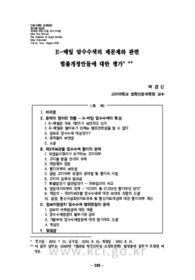
E-메일 압수수색의 제문제와 관련 법률개정안들에 대한 평가 (Problems of and Legislative Solutions to Searching and Seizing Electronic Mails)

50 페이지
기타파일
최초등록일 2025.06.04 최종저작일 2010.08
50P 미리보기
E-메일 압수수색의 제문제와 관련 법률개정안들에 대한 평가
  • 미리보기

    서지정보

    · 발행기관 : 인하대학교 법학연구소
    · 수록지 정보 : 법학연구 / 13권 / 2호 / 265 ~ 314페이지
    · 저자명 : 박경신

    초록

    최근 수건의 E-메일 압수수색은 수사대상이 모든 대상과 주고받은 수년 또는 수개월간의 E-메일을 통째로 압수수색하는 양태로 이루어지면서 많은 논란을 불러 일으켰다. 그러나 그러한 논란은 E-메일이 가진 특성의 발현이다. 첫째 E-메일 압수수색은 보통 그 내용에 대해 프라이버시 법익을 가지고 있는 E-메일계정소유자에게는 아무런 통지도 없이 그 E-메일이 물리적으로 위치한 E-메일서버의 운영자에 대해 이루어진다. 그런데 E-메일서버운영자는 해당 E-메일의 내용에 대해 별다른 법익을 가지고 있지 않아 영장을 청구하고 집행하는 수사기관 측에 대해 저항의 주체가 되지 못한다. 이와 같은 저항의 부재는 판사들이 압수수색을 쉽게 발부할 수 있는 분위기를 제공한다. 둘째 E-메일 압수수색의 범위를 제한하는 것은 어려운데 그 이유는 E-메일이 범죄수사에 유관한가의 판단은 E-메일을 열어보기 전에는 모르기 때문이다. 이 두 가지 E-메일의 특성 때문에 입법자들은 E-메일이나 다른 압수수색대상의 유형들을 특별하게 취급하는 개정안을 제안하여왔다.
    그러나 E-메일 압수수색의 문제들은 E-메일에서만 발생하는 것이 아니라 다음 두 가지 유형의 압수수색대상에 있어서 공히 발생한다. 즉, 제3자보관물과 정보저장장치이다. 첫째, 제3자보관물 압수수색은 실제 압수수색물에 대해 법익을 가진 자(“기본권주체”)에 대한 통보 없이 이루어지기 십상이며 이와 같은 통보의 부재는 적법절차의 원리를 위반한다. 둘째, 모든 정보는 외관상 평이하여 유형화가 불가능하며 이는 비정보물건은 외관에 따라 유형화된다는 점에서 구별된다. 모든 컴퓨터파일은 열어보기 전에는 상호 차별성이 없는 반면 집에서 발견되는 물체들은 육안검색만으로도 외관에 따라 유형화될 수 있다(예를 들어, 총과 식기가 구별될 수 있듯이). 이에 따라 정보를 찾기 위한 압수수색은 그 정보를 보관하고 있는 정보저장장치 전체에 대한 압수수색이 불가피하게 되고 바로 헌법적으로 금기시되는 포괄적 압수수색까지 이어질 수 있다.
    형사소송법과 실무는 이와 같이 제3자보관물 및 정보저장장치에 대한 압수수색과 관련되어 발생하는 헌법적 문제에 대해 보편적으로 대응해야 한다. 정리하자면, ① 수사대상이 된 사람은 그의 프라이버시가 그의 사적 정보, 물건 또는 장소를 위탁한 제3자에 대한 압수수색에 의해 침해되는 모든 경우 즉각적으로 통보받아야 하며, ② 정보저장장치에 대한 압수수색은 1차적으로 독립적인 제3자에 의해 사전검색에 의해 식별된 범죄유관정보들이 비로소 수사기관에 전달되는 방식으로 이루어져야 한다. 추가적으로 우리나라의 경우 압수수색영장 발부요건이 체포영장이나 구속영장에 비해 너무 낮기 때문에 이를 엄격히 하거나 범위설정을 더욱 구체화할 필요가 있고 또 압수수색적부심과 같이 법관의 영장발부요건의 운용에 대한 평가시스템도 도움이 될 것이다.
    그리고 위와 같은 해결책이 일관성 있게 적용되기 위해서 한국에서는 감청, 통신사실확인자료취득 등 E-메일 압수수색처럼 정보이면서 제3자보관물인 것들에 대해 이루어지는 수사기법들을 통제하는 특별법들 즉 통신비밀보호법과 전기통신사업법에 대해서도 개선이 이루어져야 한다. 첫째, 현재 감청, 통신사실확인자료취득 등을 당하는 기본권주체에 대한 통보가 기소 및 불기소결정 이후에야 이루어지도록 되어 있고 그 통보마저도 검찰의 재량에 의해 유예가 가능한데 시정되어야 한다. 둘째, 일반에게 공개되는 인터넷게시글의 게시자를 추적할 수 있는 신원확인정보를 통신자료제공이라는 이름으로 영장도 없이 게시자에 대한 통보도 없이 수사기관들이 취득하고 있다는 점이 시정되어야 한다.

    영어초록

    Search and seizure of electronic mails in recent cases has caused much controversy as in some cases emails exchanged for several years and months with everyone communicating with the suspect were seized by the prosecutors. However, such controversies are the inevitable ramifications of the two features of emails. Firstly, search/seizure of emails is typically done on a third party other than, and without any notice to, the email account holders, who have privacy interests in their contents. That third party, the email service providers who manage the servers on which the emails to be seized and searched are physically located, typically do not have any privacy interest that would have provided countervailing forces to the officials applying for and executing the warrants. Such lack of resistance allows the judges to issue email search and seizure warrants more readily. Secondly, narrowing down the search/seizure scope of emails is difficult for measuring each email's relevance to the undergoing investigations is impossible without actually opening them. Due to these special problems, legislators have made various proposals carving out and specially treating emails or other subset of search and seizure objects such as information or communication-related records from other search and seizures.
    However, the author argues that the special problems of emails are not really special and all objects of search and seizure within two subsets potentially share the same problems, namely, (1) third-party-possessed objects and (2) information. Firstly, search and seizure of all third-party-possessed objects suffer from lack of notice to the real-party-in-interest upon search and seizure, whereby the notice component of the due process right is violated. Secondly, all information are externally generic and non-classifiable while non-information objects can be classified according to external features. All computer files are indistinguishable from one another while objects in a searched house can be classified on a plain view (say, guns can be separated from utensils). Therefore, searching and seizing for information necessarily entails reviewing all information recorded on the targetted information-holding device, resulting effectively a general search, a constitutional abomination.
    The author proposes that criminal procedure law and practice need be amended to address the constitutional issues associated with search and seizure of third-party-possessed-objects and information. In short, the author proposes, firstly that the person being targeted by the investigation needs be notified whenever his or her privacy is being infringed upon by searching and seizing the third party entrusted with his or her private information, articles, or place, and secondly that searching and seizing the devices holding information be inspected by an independent third party for relevance and only those files relevant to the investigations are screened and turned over to the investigators. Also, uniquely in Korea, the requirement for search and seizure warrant is too low compared to that of a 2-day arrest warrant or a regular arrest warrant and therefore needs be heightened, and also the operation of that requirement may be better policed through a motion to quash warrant procedure.
    Now, if these solutions are to be applied consistently, the Korean laws of wiretapping, acquisition of pen and register information, etc., need be also revised, according to the author, since they share the aforesaid two characteristics of email search and seizure. The notices to the real-parties-in-interest who are wiretapped or acquired pen and register information sometimes never reach them because in Korea the duty to give notices arises only after the prosecutors make a final decision on whether to indict, a decision in cases not made for many years or ever. Even such notices can be deferred upon discretion of the prosecutors. Also, in Korea, the information tracking the authors of the otherwise anonymous posts on the internet can be obtained from a third party by the authorities without a warrant and without any notice to the thus tracked person.

    참고자료

    · 없음
  • 자주묻는질문의 답변을 확인해 주세요

    해피캠퍼스 FAQ 더보기

    꼭 알아주세요

    • 자료의 정보 및 내용의 진실성에 대하여 해피캠퍼스는 보증하지 않으며, 해당 정보 및 게시물 저작권과 기타 법적 책임은 자료 등록자에게 있습니다.
      자료 및 게시물 내용의 불법적 이용, 무단 전재∙배포는 금지되어 있습니다.
      저작권침해, 명예훼손 등 분쟁 요소 발견 시 고객센터의 저작권침해 신고센터를 이용해 주시기 바랍니다.
    • 해피캠퍼스는 구매자와 판매자 모두가 만족하는 서비스가 되도록 노력하고 있으며, 아래의 4가지 자료환불 조건을 꼭 확인해주시기 바랍니다.
      파일오류 중복자료 저작권 없음 설명과 실제 내용 불일치
      파일의 다운로드가 제대로 되지 않거나 파일형식에 맞는 프로그램으로 정상 작동하지 않는 경우 다른 자료와 70% 이상 내용이 일치하는 경우 (중복임을 확인할 수 있는 근거 필요함) 인터넷의 다른 사이트, 연구기관, 학교, 서적 등의 자료를 도용한 경우 자료의 설명과 실제 자료의 내용이 일치하지 않는 경우

“법학연구”의 다른 논문도 확인해 보세요!

문서 초안을 생성해주는 EasyAI
안녕하세요 해피캠퍼스의 20년의 운영 노하우를 이용하여 당신만의 초안을 만들어주는 EasyAI 입니다.
저는 아래와 같이 작업을 도와드립니다.
- 주제만 입력하면 AI가 방대한 정보를 재가공하여, 최적의 목차와 내용을 자동으로 만들어 드립니다.
- 장문의 콘텐츠를 쉽고 빠르게 작성해 드립니다.
- 스토어에서 무료 이용권를 계정별로 1회 발급 받을 수 있습니다. 지금 바로 체험해 보세요!
이런 주제들을 입력해 보세요.
- 유아에게 적합한 문학작품의 기준과 특성
- 한국인의 가치관 중에서 정신적 가치관을 이루는 것들을 문화적 문법으로 정리하고, 현대한국사회에서 일어나는 사건과 사고를 비교하여 자신의 의견으로 기술하세요
- 작별인사 독후감
해캠 AI 챗봇과 대화하기
챗봇으로 간편하게 상담해보세요.
2026년 01월 23일 금요일
AI 챗봇
안녕하세요. 해피캠퍼스 AI 챗봇입니다. 무엇이 궁금하신가요?
9:18 오후