• AI글쓰기 2.1 업데이트
PARTNER
검증된 파트너 제휴사 자료

국제법상 망명정부의 승인(承認)에 관한 연구 - 대한민국 임시정부의 법적 지위를 중심으로 - (Recognition of Government-in-exile in International Law - Legal Status of the Korean Provisional Government of Shanghai -)

40 페이지
기타파일
최초등록일 2025.05.09 최종저작일 2019.06
40P 미리보기
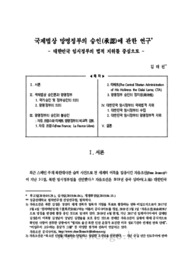
국제법상 망명정부의 승인(承認)에 관한 연구 - 대한민국 임시정부의 법적 지위를 중심으로 -
  • 미리보기

    서지정보

    · 발행기관 : 대한국제법학회
    · 수록지 정보 : 국제법학회논총 / 64권 / 2호 / 45 ~ 84페이지
    · 저자명 : 김태원

    초록

    대한민국 임시정부의 망명정부적 지위는 법률적 상태에 대한 고도의 정치적 행위인 국제법상 승인의 문제이다. 국제사회의 승인이 지닌 정치성(政治性)은 대한민국 임시정부의 망명정부적 지위를 부정하는 입장에서 주된 근거로 제시하는 실효성 측면에 대한 재고의 여지를 제공한다. 당시 국제정세를 감안하면 중국으로부터의 승인은 임시정부가 망명정부로서 법적 지위를 지닌다고 간주할 수 있는 주요한 맥락이다. 물론, 대한민국 임시정부는 전통적인 망명정부의 승인 요건을 엄격히 적용할 경우, 실효성 측면에서 일정 부분 흠결을 지닌다. 그러나 중국 호법정부와 국민당정부의 승인, 국민참정회 임시정부 승인안 통과, 한국광복군에 대한 임시정부 통수권 일부 귀속, 임시정부 승인 비망록에 대한 공식 회답 등 국제사회의 묵시적 승인의 근거는 상당한 의미가 있다. 일반국제법 상 망명정부의 승인 관련해 엄격한 실효성 요건 적용의 문제가 제기되는 가운데, 망명정부는 비록 자국의 영토나 지역을 실효적으로 지배하지 않았지만 긴급 상황에서 법적 지위를 누렸다는 점에서 실효적 지배의 관행에서 탈피중인 경향도 확인된다. 따라서 대한민국 임시정부의 법적 지위는 일본에 의해 강제 병합된 본국의 영토를 회복하고 식민국 통치에서 해방·독립하려는 성격의 ‘특수형태의 과도적(過渡的) 망명정부’이자 ‘대한제국과 동일성을 지닌 대한민국의 재수립’이다.
    북한의 법적 지위는 남북한의 UN 동시 가입, 남북기본합의서 채택 등에도 불구하고, 대한민국 정부를 한반도 유일합법정부로 명시한 UN 총회결의, 헌법 제3조에 따라 여전히 국가보안법상 반국가단체이다. 그러나 오늘날 그 심각성이 고조되는 북한 주민의 인권 유린 현실을 포함한 북한 사회 전반에 걸친 제반 문제에 대해 한반도의 유일합법정부로서 당위성을 갖고 살펴볼 의무가 있다. 현 시점에서 통일의 시기를 예단하기는 어려우나 반드시 자유민주적(自由民主的)·헌법합치적(憲法合致的) 통일을 실현해야 할 것이다. 이러한 가운데 김일성 일가의 3대 세습 및 독재정권 타도를 전제로 자유민주주의 체제를 지향하는 것으로 예상되는 자유조선의 한반도 통일 인식에 대해서도 주목할 필요가 있다. 대다수 망명정부의 시작이 미미하였음을 돌아볼 때, 자유조선의 후속 활동이 어떻게 발전되느냐에 따라 자유조선의 법적 지위가 대한민국 임시정부와 같이 종국에 망명정부적 지위를 지닐 가능성을 완전히 배제할 수 없기 때문이다. 자유조선이 자유민주주의 체제를 지향하는 북한 임시정부로서 정식 승인을 받게 된다면, 한반도 통일의 당사자가 되는 대한민국과 자유조선은 동일한 정치체제 간의 통합을 논의하게 될 것이며 한반도를 둘러싼 주변국 간의 국제정세 측면에서도 큰 변화가 초래될 수 있다. 이렇듯 향후 한반도 통일과 관련해 발생 가능한 다양한 법적 쟁점에 대해 우리가 보다 기민하게 대응할 수 있도록 사전에 충분한 법적 검토가 이뤄져야 할 것이다.

    영어초록

    The full recognition of the Provisional Government of the Republic of Korea based in Shanghai as the Korean Provisional Government under international law is a matter of defining the nature of a government that constitutes a nation. The politics of the international community’s recognition of such governments, as confirmed through Free France and the Tibetan government-in-exile - the two representative examples of governments-in-exile, testify to the need to reconsider the contention of those denying the status of the Korean Provisional Government as the Korean government-in-exile under the argument that it was illegitimate. At the time when the Korean Provisional Government was struggling to gain the international community’s recognition of its government-in-exile status, it was faced with an extremely difficult situation both politically and historically. As such, the recognition of the Chinese government, which provided asylum, can be interpreted as constituting much more than the simple support of a third country and as an act of endorsing the legal status of the Korean Provisional Government as the Korean government-in-exile.
    Admittedly, the Korean Provisional Government has certain flaws in terms of legitimacy when stringently examined through the conventional criteria of international law for recognition as a government-in-exile. However, amidst the political turmoil of the Japanese colonial period, the Korean Provisional Government gained the recognition of the Chinese military government in Guangzhou led by Sun Yat-sen and the Kuomintang (the Chinese Nationalist Party), the bill to recognize the Korean Provisional Government was passed by the People’s Political Council of the Nationalist government, the Korean Provisional Government partially exercised supreme command over the Korean Liberation Army, and official replies were sent by neighboring countries in response to the memorandums requesting the recognition of the Korean Provisional Government. All of these acts serve as the grounds for implied recognition by the international community and thus hold great significance. Furthermore, questions are being raised as to whether it is appropriate to rigidly apply the conventional criteria for legitimacy regarding recognition as a government-in-exile based on general international law. The movement to break away from the convention of excessively focusing on the substantive governance of native territory is gaining voices as many governments-in-exile throughout history enjoyed legal status during emergencies without substantively ruling their native territory. Therefore, the Korean Provisional Government can be viewed as the combination of “a transitional government-in-exile in a unique form,” which was both a government-in-exile striving to recover native territory forcefully annexed by Japan and a provisional government established to achieve liberation from colonial rule, and “the only legitimate government of the Republic of Korea, the successor to the Korean Empire, recognized by the international community.” North Korea’s legal status was confirmed through its simultaneous admission to the United Nations along with South Korea; the adoption of the Agreement on Reconciliation, Non-Aggression, and Exchanges and Cooperation between South and North Korea; and a series of summits with major countries regarding denuclearization. However, North Korea still remains an anti-government organization based on the United Nations General Assembly resolution, which specifies the Republic of Korea as the only legitimate government on the Korean Peninsula, and Article 3 of the Constitution of the Republic of Korea. The gravity of North Korea’s issues, such as the human rights infringement of local residents, continues to escalate, and South Korea, as the only legitimate government on the Korean Peninsula, is obligated to pay closer attention to these issues. Although it is difficult at this time to predict when reunification will be achieved, we are determined to ensure that the reunification of the two Koreas is accomplished both democratically and peacefully in a manner that complies with the Constitution of the Republic of Korea. In this context, it is critical to take note of Free Joseon and its credo on reunification. Free Joseon is a political group that has declared itself as the North Korean provisional government and is believed to be working hard to implement liberal democracy and overthrow North Korea’s dictatorship passed down to the third generation. The beginnings of most governments-in-exile have been humble, and the possibility of Free Joseon’s legal status to develop into that of a provisional government, just like the Korean Provisional Government, cannot be ruled out, Such recognition hinges on how Free Joseon’s future activities will unfold.

    참고자료

    · 없음
  • 자주묻는질문의 답변을 확인해 주세요

    해피캠퍼스 FAQ 더보기

    꼭 알아주세요

    • 자료의 정보 및 내용의 진실성에 대하여 해피캠퍼스는 보증하지 않으며, 해당 정보 및 게시물 저작권과 기타 법적 책임은 자료 등록자에게 있습니다.
      자료 및 게시물 내용의 불법적 이용, 무단 전재∙배포는 금지되어 있습니다.
      저작권침해, 명예훼손 등 분쟁 요소 발견 시 고객센터의 저작권침해 신고센터를 이용해 주시기 바랍니다.
    • 해피캠퍼스는 구매자와 판매자 모두가 만족하는 서비스가 되도록 노력하고 있으며, 아래의 4가지 자료환불 조건을 꼭 확인해주시기 바랍니다.
      파일오류 중복자료 저작권 없음 설명과 실제 내용 불일치
      파일의 다운로드가 제대로 되지 않거나 파일형식에 맞는 프로그램으로 정상 작동하지 않는 경우 다른 자료와 70% 이상 내용이 일치하는 경우 (중복임을 확인할 수 있는 근거 필요함) 인터넷의 다른 사이트, 연구기관, 학교, 서적 등의 자료를 도용한 경우 자료의 설명과 실제 자료의 내용이 일치하지 않는 경우
문서 초안을 생성해주는 EasyAI
안녕하세요 해피캠퍼스의 20년의 운영 노하우를 이용하여 당신만의 초안을 만들어주는 EasyAI 입니다.
저는 아래와 같이 작업을 도와드립니다.
- 주제만 입력하면 AI가 방대한 정보를 재가공하여, 최적의 목차와 내용을 자동으로 만들어 드립니다.
- 장문의 콘텐츠를 쉽고 빠르게 작성해 드립니다.
- 스토어에서 무료 이용권를 계정별로 1회 발급 받을 수 있습니다. 지금 바로 체험해 보세요!
이런 주제들을 입력해 보세요.
- 유아에게 적합한 문학작품의 기준과 특성
- 한국인의 가치관 중에서 정신적 가치관을 이루는 것들을 문화적 문법으로 정리하고, 현대한국사회에서 일어나는 사건과 사고를 비교하여 자신의 의견으로 기술하세요
- 작별인사 독후감
해캠 AI 챗봇과 대화하기
챗봇으로 간편하게 상담해보세요.
2026년 01월 09일 금요일
AI 챗봇
안녕하세요. 해피캠퍼스 AI 챗봇입니다. 무엇이 궁금하신가요?
2:54 오후