• AI글쓰기 2.1 업데이트
BRONZE
BRONZE 등급의 판매자 자료

Essay_Devils on the Freeway_Negotiation Strategy

핀란드 Aalto 대학교 MBA 과정에서 과제로 작성한 리포트 입니다.
3 페이지
워드
최초등록일 2023.02.04 최종저작일 2022.06
3P 미리보기
Essay_Devils on the Freeway_Negotiation Strategy
  • 미리보기

    소개

    핀란드 Aalto 대학교 MBA 과정에서 과제로 작성한 리포트 입니다.

    목차

    없음

    본문내용

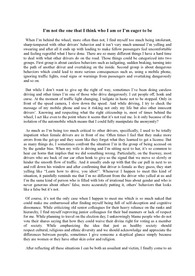
    When I’m behind the wheel, more often than not, I find myself too much being intolerant, sharp-tempered with other drivers’ behavior and it isn’t very much unusual I’m yelling and swearing and after all it ends up with leading to make fellow passengers feel uncomfortable and feeling regretful what I have done.

    참고자료

    · 없음
  • AI와 토픽 톺아보기

    • 1. Self-Deception
      Self-deception is a complex and fascinating psychological phenomenon that has significant implications for our understanding of human behavior and decision-making. At its core, self-deception involves the unconscious process of believing something to be true, even in the face of contradictory evidence. This can serve as a defense mechanism, allowing individuals to maintain a positive self-image or avoid confronting uncomfortable truths about themselves or their circumstances. However, self-deception can also have detrimental effects, leading to poor decision-making, strained relationships, and a distorted perception of reality. It is important to recognize the signs of self-deception and strive for greater self-awareness and honesty, even when it is difficult. By acknowledging our biases and blind spots, we can make more informed and ethical choices, and ultimately lead more fulfilling and authentic lives.
    • 2. Empathy
      Empathy is a fundamental human capacity that allows us to understand and share the feelings of others. It is a crucial component of emotional intelligence and social interaction, enabling us to connect with others, build stronger relationships, and foster greater understanding and compassion. Empathy goes beyond simply recognizing the emotions of others; it involves the ability to imagine ourselves in their shoes, to feel what they are feeling, and to respond with care and concern. Developing empathy is essential for personal growth, as it helps us to become more attuned to the experiences of those around us and to cultivate greater emotional awareness and sensitivity. At the same time, empathy can also be challenging, as it requires us to step outside of our own perspectives and to confront the often difficult emotions and experiences of others. By practicing empathy, however, we can become more emotionally intelligent, more socially adept, and more compassionate individuals, ultimately contributing to a more just and harmonious society.
    • 3. Prejudice and Bias
      Prejudice and bias are deeply ingrained in the human psyche, shaped by our evolutionary history, cultural conditioning, and cognitive biases. These tendencies to make snap judgments and categorize people based on superficial characteristics can have profound and often negative consequences, leading to discrimination, social division, and the perpetuation of harmful stereotypes. Overcoming prejudice and bias requires a concerted effort to challenge our own preconceptions, to seek out diverse perspectives, and to cultivate a genuine openness to understanding and appreciating the unique experiences and perspectives of others. This process is not easy, as it often requires us to confront our own deeply held beliefs and biases, and to engage in difficult and uncomfortable conversations. However, the rewards of this effort are immense, as it can lead to greater empathy, more inclusive and equitable societies, and a deeper understanding of the rich tapestry of human diversity. By acknowledging and addressing our own biases, we can work towards a more just and compassionate world.
    • 4. Driving Behavior
      Driving behavior is a complex and multifaceted issue that reflects a range of psychological, social, and environmental factors. On one hand, driving can be a highly individualistic and often impulsive activity, with drivers making split-second decisions based on their own perceptions, emotions, and cognitive biases. This can lead to behaviors such as aggressive driving, distracted driving, and risk-taking, which can have serious consequences for the safety of both the driver and others on the road. On the other hand, driving also involves a significant social component, as drivers must navigate a shared public space and adhere to a set of rules and norms that are intended to promote safety and order. Effective strategies for improving driving behavior must therefore address both the individual and the social dimensions of this complex issue. This may involve a combination of educational campaigns, enforcement of traffic laws, the development of advanced driver assistance technologies, and the promotion of a culture of mutual respect and responsibility on the roads. By addressing the psychological, social, and environmental factors that shape driving behavior, we can work towards creating a safer and more sustainable transportation system for all.
    • 5. Cognitive Techniques
      Cognitive techniques are a powerful set of tools that can be used to enhance our mental processes and improve our overall well-being. These techniques, which include practices such as mindfulness, cognitive-behavioral therapy, and metacognition, are grounded in the understanding that our thoughts, emotions, and behaviors are deeply interconnected. By developing greater awareness and control over our cognitive processes, we can learn to challenge negative thought patterns, manage stress and anxiety, and cultivate more positive and productive ways of thinking and behaving. The benefits of cognitive techniques are wide-ranging, from improved decision-making and problem-solving skills to enhanced emotional regulation and resilience. Moreover, these techniques can be applied in a variety of contexts, from personal development and mental health to professional settings and educational environments. As we continue to grapple with the complexities of the modern world, the mastery of cognitive techniques will become increasingly important, enabling us to navigate the challenges we face with greater clarity, adaptability, and self-awareness. By embracing these powerful tools, we can unlock our full potential and create more fulfilling and meaningful lives.
  • 자료후기

      Ai 리뷰
      운전 중 자신의 행동을 돌아보고, 타인에 대한 이해와 공감의 자세를 기르는 것의 중요성을 잘 설명하고 있습니다. 특히 편견과 인지 왜곡을 극복하기 위한 구체적인 방법들을 제시하고 있어 실용적이라고 할 수 있습니다.
    • 자주묻는질문의 답변을 확인해 주세요

      해피캠퍼스 FAQ 더보기

      꼭 알아주세요

      • 자료의 정보 및 내용의 진실성에 대하여 해피캠퍼스는 보증하지 않으며, 해당 정보 및 게시물 저작권과 기타 법적 책임은 자료 등록자에게 있습니다.
        자료 및 게시물 내용의 불법적 이용, 무단 전재∙배포는 금지되어 있습니다.
        저작권침해, 명예훼손 등 분쟁 요소 발견 시 고객센터의 저작권침해 신고센터를 이용해 주시기 바랍니다.
      • 해피캠퍼스는 구매자와 판매자 모두가 만족하는 서비스가 되도록 노력하고 있으며, 아래의 4가지 자료환불 조건을 꼭 확인해주시기 바랍니다.
        파일오류 중복자료 저작권 없음 설명과 실제 내용 불일치
        파일의 다운로드가 제대로 되지 않거나 파일형식에 맞는 프로그램으로 정상 작동하지 않는 경우 다른 자료와 70% 이상 내용이 일치하는 경우 (중복임을 확인할 수 있는 근거 필요함) 인터넷의 다른 사이트, 연구기관, 학교, 서적 등의 자료를 도용한 경우 자료의 설명과 실제 자료의 내용이 일치하지 않는 경우

    찾으시던 자료가 아닌가요?

    지금 보는 자료와 연관되어 있어요!
    왼쪽 화살표
    오른쪽 화살표
    문서 초안을 생성해주는 EasyAI
    안녕하세요 해피캠퍼스의 20년의 운영 노하우를 이용하여 당신만의 초안을 만들어주는 EasyAI 입니다.
    저는 아래와 같이 작업을 도와드립니다.
    - 주제만 입력하면 AI가 방대한 정보를 재가공하여, 최적의 목차와 내용을 자동으로 만들어 드립니다.
    - 장문의 콘텐츠를 쉽고 빠르게 작성해 드립니다.
    - 스토어에서 무료 이용권를 계정별로 1회 발급 받을 수 있습니다. 지금 바로 체험해 보세요!
    이런 주제들을 입력해 보세요.
    - 유아에게 적합한 문학작품의 기준과 특성
    - 한국인의 가치관 중에서 정신적 가치관을 이루는 것들을 문화적 문법으로 정리하고, 현대한국사회에서 일어나는 사건과 사고를 비교하여 자신의 의견으로 기술하세요
    - 작별인사 독후감
    해캠 AI 챗봇과 대화하기
    챗봇으로 간편하게 상담해보세요.
    2026년 01월 13일 화요일
    AI 챗봇
    안녕하세요. 해피캠퍼스 AI 챗봇입니다. 무엇이 궁금하신가요?
    11:59 오전