• AI글쓰기 2.1 업데이트
PARTNER
검증된 파트너 제휴사 자료

어거스틴의 전쟁관: 의로운 전쟁? (Augustine’s View on War: Just War?)

한국학술지에서 제공하는 국내 최고 수준의 학술 데이터베이스를 통해 다양한 논문과 학술지 정보를 만나보세요.
33 페이지
기타파일
최초등록일 2025.06.08 최종저작일 2009.02
33P 미리보기
어거스틴의 전쟁관: 의로운 전쟁?
  • 미리보기

    서지정보

    · 발행기관 : 장로회신학대학교 세계선교연구원
    · 수록지 정보 : 선교와신학 / 23호 / 249 ~ 281페이지
    · 저자명 : 김영도

    초록

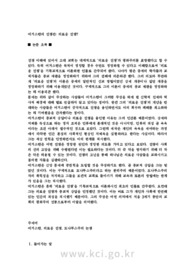
    전쟁 이해에 있어서 고대 교회는 대체적으로 ‘의로운 전쟁’과 평화주의를 표방했다고 할 수 있다. 특히 어거스틴은 목적이 정당할 경우 수단도 정당화될 수 있다고 이해함으로써 ‘의로운 전쟁’을 기독교적으로 이론화한 인물로 간주되어 왔다. 나아가 많은 중세의 학자들과 교직자들은 종교 재판을 정당화하기 위하여 그의 견해에 의존하곤 했다. 그의 의도와 무관하게 ‘의로운 전쟁’의 이론은 중세의 일반적인 선교 방법이었던 강제 개종이나 집단 개종을 정당화하기 위해 이용되었던 것이다. 구체적으로 그의 이론이 중세의 종교 재판을 정당화하는 데 이용되곤 했다.
    문제는 위와 같이 주장하는 사람들이 어거스틴이 그러한 주장을 하게 된 신학적 전제와 역사적 배경에 대해 별로 언급하지 않고 있다는 점이다. 한편 그의 ‘의로운 전쟁’의 개념을 반대하는 사람들은 어거스틴이 궁극적으로 전쟁을 용인하면서도 이의 회수와 폐해를 최소화하는 데 기여했음을 간과했다는 점이다.
    어거스틴이 종교적 강압이나 의로운 전쟁을 용인한 이유는 그의 인간론 때문이었다. 강제와 지배를 특징으로 하는 정치 조직은 인류에게 본래적인 것은 아니지만, 인류의 죄성 곧 육욕이라는 조건 아래서 필수적인 것으로 보았다. 그런데 제국은 개인의 육욕을 제어하는 과정에서 타락한 인간 본성의 사회적인 현상인 지배욕을 실현하려고 한다는 사실이다. 따라서 그는 세상 권력을 인정하면서도 이의 한계를 직시했다.
    어거스틴은 어떤 전쟁은 정당한 원인과 정당한 의도를 가지고 있다고 보았다. 전쟁이 사회의 선의 고양을 위해 수행된다면 이는 필요하다는 것이다. 더 큰 악을 방지하기 위해 더 작은 악은 허용될 수 있는 것이다. 전쟁의 고난을 통해 하나님은 의로운 사람들을 교화시키고 불의한 자들을 심판하신다.
    어거스틴은 신앙 문제에 공권력을 도입할 것을 주장하기도 했다. 곧 종교적 강압을 그는 믿었던 것이다. 이는 구체적으로 도나투스주의라고 하는 분리주의 때문이었다. 도나투스주의자의 폭력성을 저지하고 그들을 보편적 교회로 돌이키기 위해 교육과 토론의 방법에는 한계가 있음을 그는 직시했다.
    어거스틴은 흔히 ‘의로운 전쟁’을 기독교적으로 이론화시킨 최초의 인물로 간주된다. 요컨대 그는 의로운 전쟁과 종교적 강압을 인정했던 것이다. 이는 바로 그가 개인과 사회에 만연해 있는 인간의 죄성을 직시했기 때문이다. 그의 주장은 어떤 의미에서 처음 3세기 동안의 교회의 평화주의 전통으로부터 이탈을 의미했다.

    영어초록

    Augustine (354-430) has been claimed to lay out the “just war” theory. Regardless of his motivations and intentions, he has been cited as the authory for justifying wars and religious coercion. He is even believed to be the progenitor of the Inquisition in the Middle Ages. Yet I believe that the historical Augustine has been misinterpreted and his thoughts have been quoted wthout qualifications. Accordingly it is imperative to explore the true picture of his positions on war and religious coercion. With reference to his understanding of war, basically the writings written during the period of the Donatist controversy will be examined.

    Christian attitudes towards war have been encapsulated into the theory of the just war and pacifism. According to the former, waging war is inevitable and even desirable. According to the latter, however, it cannot be justified under any circumstances. In the pre-Constantinian era church fathers advocated pacifism which is characterized by non-violence. On the other hand, in the post-Constantinian period when church and state became the two wings of Christendom they came up with somewhat different views on war of which the theory of the just war came to the fore. Augustine is believed to have been the cardinal theorist of this position.

    Augustine is understood to have Christianized Ciceronian idea of the just war and this in turn made a critical impact upon the political theories of the medieval age. His idea of war, though influenced by Platonic and Stoic concepts of war, was grounded in Christian love. More specifically, his theory was based upon his Christian anthropology. His view on war was further elaborated by Thomas Aquinas (1225-75) and was adopted by major Reformers such as Luther (1483-1546) and Calvin (1509-64). Even today his view is advocated by some scholars such as Reinhold Niebuhr (1882-1971).

    Augustine made an authropological analysis of war and peace. He believed that nobody was created to be others’ slave because the human person or rational creation was created in the image of God. Yet Adam’s Fall defaced the image of God. Eventually concupiscentia resulted. Personally it can be epitomized as carnal lust and socially uncontrollable desire for dominance. Individuals are apt to satisfy themselves with less than God Himself because of the rampant power of concupiscence, which is best illustrated by the uncontrollable sexual desire beyond the reach of human will and reason. Thus Augustine believed that concupiscence should be controlled by an external means. For Augustine, therefore, the presence of the state is inevitable on condition that human persons are corrupt.

    The state can be God’s agent to maintain peace and deter turmoil within and between, nations. The problem at stake is that it is apt to overly exercise its power and thus realize its own libido dominandi, the social phenomenon of concupiscence. According to Augustine, therefore, the state can be the agent of the civitas diaboli characteristic of amor sui and hatred. The state is constructed on the blood of the dominated. Even after the Roman Empire became a Christian nation it attempts to fulfill lust for dominance which is the social phenomenon of the corrupt human nature. To sum up, despite their malfunction Augustine justified worldly powers because he thought that they could deter individuals’ concupiscence. For him what is right and what is wrong depend upon inner intention rather than external behavior.

    In the Donatist controversy Augustine is believed to have justified religious coercion towards Donatist schismatics. In its initial stage, however, he did nat believe in it. He asserted that religious matters should be decided through discussions or by the power of reason. As some staunch Donatists were resorting to violence against the Catholic Church he changed his mind, having recourse to the power of the Empire. He admitted that at times fear rather than love could correct their errors more easily. For the unity of the church, according to Augustine, the use of the physical means can be allowed especially when its objective is good and just. Yet he did not believe in capital punishment nor torture. For him, however, the Catholic Church can resort to violence out of love to have “wayward sons” return to the ecclesia mater. Though Augustine’s primary intention had nothing to do with allowing the use of power in the matter of faith, he has been taken advantage of to justify the Inquisition, the Crusade, and other froms of persecutions.

    In summary, Augustine admitted of the just war and religious coercion because of the rampant sinfulness of an idividual. By the same token, he pointed out the necessity of the worldly powers as well as their danger. Though the state can suppress an individual’s carnal lust, the former can be eager to achieve its own wicked objectives as well. In a sense it can be said that Augustine deviated from the tradition of pacifism which had long been charished in the church, bequeathing the medieval church a new tradition of the just war and religious coercion. In other sence, however, it can be asserted that his thoughts on them have been misunderstood by those not careful interpreters such as medieval jurists.

    참고자료

    · 없음
  • 자주묻는질문의 답변을 확인해 주세요

    해피캠퍼스 FAQ 더보기

    꼭 알아주세요

    • 자료의 정보 및 내용의 진실성에 대하여 해피캠퍼스는 보증하지 않으며, 해당 정보 및 게시물 저작권과 기타 법적 책임은 자료 등록자에게 있습니다.
      자료 및 게시물 내용의 불법적 이용, 무단 전재∙배포는 금지되어 있습니다.
      저작권침해, 명예훼손 등 분쟁 요소 발견 시 고객센터의 저작권침해 신고센터를 이용해 주시기 바랍니다.
    • 해피캠퍼스는 구매자와 판매자 모두가 만족하는 서비스가 되도록 노력하고 있으며, 아래의 4가지 자료환불 조건을 꼭 확인해주시기 바랍니다.
      파일오류 중복자료 저작권 없음 설명과 실제 내용 불일치
      파일의 다운로드가 제대로 되지 않거나 파일형식에 맞는 프로그램으로 정상 작동하지 않는 경우 다른 자료와 70% 이상 내용이 일치하는 경우 (중복임을 확인할 수 있는 근거 필요함) 인터넷의 다른 사이트, 연구기관, 학교, 서적 등의 자료를 도용한 경우 자료의 설명과 실제 자료의 내용이 일치하지 않는 경우

“선교와신학”의 다른 논문도 확인해 보세요!

문서 초안을 생성해주는 EasyAI
안녕하세요 해피캠퍼스의 20년의 운영 노하우를 이용하여 당신만의 초안을 만들어주는 EasyAI 입니다.
저는 아래와 같이 작업을 도와드립니다.
- 주제만 입력하면 AI가 방대한 정보를 재가공하여, 최적의 목차와 내용을 자동으로 만들어 드립니다.
- 장문의 콘텐츠를 쉽고 빠르게 작성해 드립니다.
- 스토어에서 무료 이용권를 계정별로 1회 발급 받을 수 있습니다. 지금 바로 체험해 보세요!
이런 주제들을 입력해 보세요.
- 유아에게 적합한 문학작품의 기준과 특성
- 한국인의 가치관 중에서 정신적 가치관을 이루는 것들을 문화적 문법으로 정리하고, 현대한국사회에서 일어나는 사건과 사고를 비교하여 자신의 의견으로 기술하세요
- 작별인사 독후감
  • 전문가 요청 쿠폰 이벤트
  • 전문가요청 배너
해캠 AI 챗봇과 대화하기
챗봇으로 간편하게 상담해보세요.
2025년 12월 03일 수요일
AI 챗봇
안녕하세요. 해피캠퍼스 AI 챗봇입니다. 무엇이 궁금하신가요?
10:07 오후