• AI글쓰기 2.1 업데이트
PARTNER
검증된 파트너 제휴사 자료

조선말 외국인의 기록을 통해본 택견 (Records of Taekkyeon Kept by Foreigners in the Late Joseon Period)

13 페이지
기타파일
최초등록일 2025.04.27 최종저작일 2014.02
13P 미리보기
조선말 외국인의 기록을 통해본 택견
  • 미리보기

    서지정보

    · 발행기관 : 한국체육과학회
    · 수록지 정보 : 한국체육과학회지 / 23권 / 1호 / 15 ~ 27페이지
    · 저자명 : 김영만, 심성섭

    초록

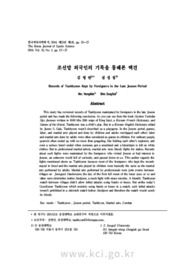
    This study has reviewed records of Taekkyeon maintained by foreigners in the late Joseon period and has made the following conclusion. As you can see from the book Gyobon Yeokdae Sijo Jeonseo written in 1648 (the 26th reign of King Injo), a Korean-French Dictionary, and Games of the Orient, Taekkyeon was a child's play. But in a Korean-English Dictionary edited by James S. Gale, Taekkyeon wasn’t described as a playgame. In the Joseon period, games, labor, and martial arts played and done by children and adults overlapped each other; labor and martial arts done by adults were often considered as games to children. For ordinary people, quarrels often ended up with no more than grappling, like holding each other’s topknots, and even a serious brawl ended when someone got a nosebleed and a bloodstain is left on white clothes. But to professional martial artists, martial arts were bloody fights for stakes. Records about such fights were maintained by the foreigners who visited Joseon or had interest in Joseon, an unknown world full of curiosity, and passed down to us. This author regards the fights mentioned above as Taekkyeon because most of the foreigners who kept the records stayed in Seoul and the martial arts played by children were basically the same as the martial arts performed by adults. Martial arts performed by professionals were joint events between villages on Jeongwol Daeboreum, the day of the first full moon of the lunar year, or so and often were skirmishes before Seokjeon, a mock fight with stone missiles. A friendly Taekkyeon match between villages didn’t allow lethal attacks using hands or knees. But unlike today’s Gyeollyeon Taekkyeon which restricts using hands or knees in a match, such lethal attacks weren’t prohibited in a skirmish match before Seokjeon and therefore the match would surely be bloody.

    영어초록

    This study has reviewed records of Taekkyeon maintained by foreigners in the late Joseon period and has made the following conclusion. As you can see from the book Gyobon Yeokdae Sijo Jeonseo written in 1648 (the 26th reign of King Injo), a Korean-French Dictionary, and Games of the Orient, Taekkyeon was a child's play. But in a Korean-English Dictionary edited by James S. Gale, Taekkyeon wasn’t described as a playgame. In the Joseon period, games, labor, and martial arts played and done by children and adults overlapped each other; labor and martial arts done by adults were often considered as games to children. For ordinary people, quarrels often ended up with no more than grappling, like holding each other’s topknots, and even a serious brawl ended when someone got a nosebleed and a bloodstain is left on white clothes. But to professional martial artists, martial arts were bloody fights for stakes. Records about such fights were maintained by the foreigners who visited Joseon or had interest in Joseon, an unknown world full of curiosity, and passed down to us. This author regards the fights mentioned above as Taekkyeon because most of the foreigners who kept the records stayed in Seoul and the martial arts played by children were basically the same as the martial arts performed by adults. Martial arts performed by professionals were joint events between villages on Jeongwol Daeboreum, the day of the first full moon of the lunar year, or so and often were skirmishes before Seokjeon, a mock fight with stone missiles. A friendly Taekkyeon match between villages didn’t allow lethal attacks using hands or knees. But unlike today’s Gyeollyeon Taekkyeon which restricts using hands or knees in a match, such lethal attacks weren’t prohibited in a skirmish match before Seokjeon and therefore the match would surely be bloody.

    참고자료

    · 없음
  • 자주묻는질문의 답변을 확인해 주세요

    해피캠퍼스 FAQ 더보기

    꼭 알아주세요

    • 자료의 정보 및 내용의 진실성에 대하여 해피캠퍼스는 보증하지 않으며, 해당 정보 및 게시물 저작권과 기타 법적 책임은 자료 등록자에게 있습니다.
      자료 및 게시물 내용의 불법적 이용, 무단 전재∙배포는 금지되어 있습니다.
      저작권침해, 명예훼손 등 분쟁 요소 발견 시 고객센터의 저작권침해 신고센터를 이용해 주시기 바랍니다.
    • 해피캠퍼스는 구매자와 판매자 모두가 만족하는 서비스가 되도록 노력하고 있으며, 아래의 4가지 자료환불 조건을 꼭 확인해주시기 바랍니다.
      파일오류 중복자료 저작권 없음 설명과 실제 내용 불일치
      파일의 다운로드가 제대로 되지 않거나 파일형식에 맞는 프로그램으로 정상 작동하지 않는 경우 다른 자료와 70% 이상 내용이 일치하는 경우 (중복임을 확인할 수 있는 근거 필요함) 인터넷의 다른 사이트, 연구기관, 학교, 서적 등의 자료를 도용한 경우 자료의 설명과 실제 자료의 내용이 일치하지 않는 경우

“한국체육과학회지”의 다른 논문도 확인해 보세요!

문서 초안을 생성해주는 EasyAI
안녕하세요 해피캠퍼스의 20년의 운영 노하우를 이용하여 당신만의 초안을 만들어주는 EasyAI 입니다.
저는 아래와 같이 작업을 도와드립니다.
- 주제만 입력하면 AI가 방대한 정보를 재가공하여, 최적의 목차와 내용을 자동으로 만들어 드립니다.
- 장문의 콘텐츠를 쉽고 빠르게 작성해 드립니다.
- 스토어에서 무료 이용권를 계정별로 1회 발급 받을 수 있습니다. 지금 바로 체험해 보세요!
이런 주제들을 입력해 보세요.
- 유아에게 적합한 문학작품의 기준과 특성
- 한국인의 가치관 중에서 정신적 가치관을 이루는 것들을 문화적 문법으로 정리하고, 현대한국사회에서 일어나는 사건과 사고를 비교하여 자신의 의견으로 기술하세요
- 작별인사 독후감
해캠 AI 챗봇과 대화하기
챗봇으로 간편하게 상담해보세요.
2026년 01월 09일 금요일
AI 챗봇
안녕하세요. 해피캠퍼스 AI 챗봇입니다. 무엇이 궁금하신가요?
8:13 오후