• AI글쓰기 2.1 업데이트
PARTNER
검증된 파트너 제휴사 자료

신라 興德王 敎書에 보이는 공예 장식과 국제교역 (Decorations on Craft Works and International Trade Revealed in King Heungdeok’s Decree of Silla)

32 페이지
기타파일
최초등록일 2025.04.11 최종저작일 2017.04
32P 미리보기
신라 興德王 敎書에 보이는 공예 장식과 국제교역
  • 미리보기

    서지정보

    · 발행기관 : 한국고대사탐구학회
    · 수록지 정보 : 한국고대사탐구 / 25호 / 309 ~ 340페이지
    · 저자명 : 신숙

    초록

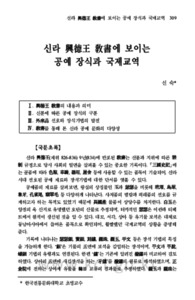
    신라 興德王(재위 826-836) 9년(834)에 반포된 敎書는 신분과 지위에 따른 禁制 규정으로 당시 사회의 일면을 살펴볼 수 있는 중요한 기록이다. 『三國史記』에는 골품에 따라 色服, 車騎, 器用, 屋舍 등에 사용할 수 있는 품목이 기술되어, 신라시대 선호된 공예 재료와 장식기법에 대한 단서를 엿볼 수 있다.
    공예품의 재료를 살펴보면, 왕실의 상징물인 玉과 瑟瑟을 비롯해 玳瑁, 烏犀, 象牙, 孔雀尾, 翡翠毛 등 다양하게 나타난다. 사치품의 범람과 외래품의 선호를 규제하고자 하는 목적도 있었기 때문에 異國産 물품이 상당수를 차지한다. 白玉은 양질의 옥 산지로 유명했던 호탄의 산물로 추정되며, 터키석인 瑟瑟은 이란과 티베트에서 원석이 생산된 것을 알 수 있다. 대모, 서각, 상아 등 유기물 보석은 대체로 동남아시아에서 들여온 품목으로 확인되어, 활발했던 국제교역의 상황을 증명해 준다.
    기록에 나타나는 瑟瑟鈿, 寶鈿, 刻鏤, 綴珠, 綴玉, 平文 등은 장식 기법의 특징을 가늠하게 한다. ‘鈿’은 기물의 표면에 보석을 감입하는 장식이며, 平文과 平脫, 螺鈿 기법의 유행과도 연결된다. 한편 ‘鏤’는 기존에 알려진 撥鏤와 비교하여 검토하였다. 상아의 표면에 새김장식을 하는 ‘牙鏤’를 撥鏤의 원류로 해석하였으며, 正倉院에 전하는 상아제 유물을 韓日 교류의 결과물로 추정하였다. 綴玉과 綴珠는 옥이나 진주와 같은 보석을 꿰거나 엮어 화려함을 배가하는 공예 기법으로 파악하였다.
    금제규정은 신분에 맞지 않는 사치품의 사용이나 호화로운 물품의 유행을 반증해 준다. 강력한 규제가 필요할 만큼 상류 문화에 대한 열망과 소비가 확대된 것이다. 신분제로 유지되는 사회에서 규범을 벗어난 풍속이 긍정적인 현상은 아니겠지만 신라 문화의 수준과 다양성에 변화를 가져왔다. 각종 외래품은 신라의 적극적 대외교류를 확인해 주며, 고가의 재료를 더욱 빛나게 했던 우수한 장식 기술은 공예 분야의 융성과 번영에 밑거름이 되었다.

    영어초록

    The decree promulgated by King Heungdeok (興德王, r. 826–836) of Silla in 834, as recorded in Samguk sagi (三國史記), documents prohibition regulations on social class and strata, providing valuable information for understanding Silla society. Samguk sagi, in which recounts items that could be used to decorate garments, carts, objects, and houses according to golpum (骨品, bone–rank), shows favored materials and techniques for making and embellishing craft works during the Silla Kingdom.
    Such record indicates various craft materials, ranging from jade (玉) and seulseul (瑟瑟), both of which were symbols of the royal family, to others, such as striped-tortoise shells (玳瑁), rhinoceros horn (烏犀), ivory (象牙), green peafowl tails (孔雀尾), and kingfisher feathers (翡翠毛). Most of these materials were imported goods as they were mentioned in the context of restricting the flood of luxuries and a preference for exotic goods as well. White jade was presumed to be the product of Khotan, a famous site for high-quality jade, while seulseul, also known as turquoise, was obtained from Iran and Tibet. Organic precious materials, including striped-tortoise shells, rhinoceros horn, and ivory, turned out to be mostly imported from Southeast Asia, evidencing Silla’s active international trade.
    The decree also include technical terms – for example, turquoise inlay (瑟瑟鈿), gemstone inlay (寶鈿), engraving (刻鏤), plaiting beads (綴珠), plaiting jades (綴玉), and embedding shapes cut from gold, silver, or tin sheets (平文), which suggest characteristics of decorating methods. The first two related to inlay (鈿) refer to a decoration technique of inlaying gems on the surfaces of objects, and are related to the wide use of pyeongmun (平文), pyeongtal (平脫), and najeon (螺鈿) practices. In the case of engraving (鏤), I examined the term by comparing it with ballu (撥鏤), which is better known as bachiru. Bachiru appears to have originated from another term, aru (牙鏤), a carving technique applied on the surface of ivory, and the ivory artifact housed in Shōsōin (正倉院) can be inferred to be derived from exchanges between Korea and Japan. Plaiting beads and plaiting jades, or cheolju (綴珠) and cheorok (綴玉) in Korean respectively, can be understood as techniques to add splendor by stringing or plaiting gems, such as pearl or jade.
    The prohibition laws reflect the frequent use of luxury items that did not match the social status and the popularity of extravagant goods. In other words, the desire to absorb upper class culture was so deep that strong control regulations were necessary. Although customs not abiding by social norms in the Silla society with its rigid hierarchy did not imply a positive phenomenon, they led to several changes in the cultural level and cultural diversity of Silla. All sorts of foreign products had proved Silla’s active foreign trades with other countries. Moreover, outstanding decoration techniques that made such extravagant materials shine even more had validated the advanced craft culture of Silla.

    참고자료

    · 없음
  • 자주묻는질문의 답변을 확인해 주세요

    해피캠퍼스 FAQ 더보기

    꼭 알아주세요

    • 자료의 정보 및 내용의 진실성에 대하여 해피캠퍼스는 보증하지 않으며, 해당 정보 및 게시물 저작권과 기타 법적 책임은 자료 등록자에게 있습니다.
      자료 및 게시물 내용의 불법적 이용, 무단 전재∙배포는 금지되어 있습니다.
      저작권침해, 명예훼손 등 분쟁 요소 발견 시 고객센터의 저작권침해 신고센터를 이용해 주시기 바랍니다.
    • 해피캠퍼스는 구매자와 판매자 모두가 만족하는 서비스가 되도록 노력하고 있으며, 아래의 4가지 자료환불 조건을 꼭 확인해주시기 바랍니다.
      파일오류 중복자료 저작권 없음 설명과 실제 내용 불일치
      파일의 다운로드가 제대로 되지 않거나 파일형식에 맞는 프로그램으로 정상 작동하지 않는 경우 다른 자료와 70% 이상 내용이 일치하는 경우 (중복임을 확인할 수 있는 근거 필요함) 인터넷의 다른 사이트, 연구기관, 학교, 서적 등의 자료를 도용한 경우 자료의 설명과 실제 자료의 내용이 일치하지 않는 경우

“한국고대사탐구”의 다른 논문도 확인해 보세요!

문서 초안을 생성해주는 EasyAI
안녕하세요 해피캠퍼스의 20년의 운영 노하우를 이용하여 당신만의 초안을 만들어주는 EasyAI 입니다.
저는 아래와 같이 작업을 도와드립니다.
- 주제만 입력하면 AI가 방대한 정보를 재가공하여, 최적의 목차와 내용을 자동으로 만들어 드립니다.
- 장문의 콘텐츠를 쉽고 빠르게 작성해 드립니다.
- 스토어에서 무료 이용권를 계정별로 1회 발급 받을 수 있습니다. 지금 바로 체험해 보세요!
이런 주제들을 입력해 보세요.
- 유아에게 적합한 문학작품의 기준과 특성
- 한국인의 가치관 중에서 정신적 가치관을 이루는 것들을 문화적 문법으로 정리하고, 현대한국사회에서 일어나는 사건과 사고를 비교하여 자신의 의견으로 기술하세요
- 작별인사 독후감
해캠 AI 챗봇과 대화하기
챗봇으로 간편하게 상담해보세요.
2026년 01월 26일 월요일
AI 챗봇
안녕하세요. 해피캠퍼스 AI 챗봇입니다. 무엇이 궁금하신가요?
5:39 오전